中文|English
ISSN 1001-5256 (Print)
ISSN 2097-3497 (Online)
CN 22-1108/R
Volume 42 Issue 10
Oct.  2026
Turn off MathJax
Article Contents

Construction and validation of a visual model to aid the differentiation between autoimmune hepatitis and primary biliary cholangitis

DOI: 10.12449/JCH261019
Research funding:

Natural Science Foundation of Fujian Province (2025J01268);

Natural Science Foundation of Fujian Province (2025J011310);

Natural Science Foundation of Fujian Province (2021J011283)

More Information
  • Corresponding author: Li Haitao, lht45182@163.com (ORCID: 0000-0003-4680-4752); Zheng Qi, zhengqi0825@sina.com (ORCID: 0000-0001-8006-7069); Zeng Yongyi, lamp197311@126.com (ORCID: 0000-0001-8823-698X)
  • Received Date: 2026-08-21
  • Accepted Date: 2026-09-17
  • Published Date: 2026-10-25
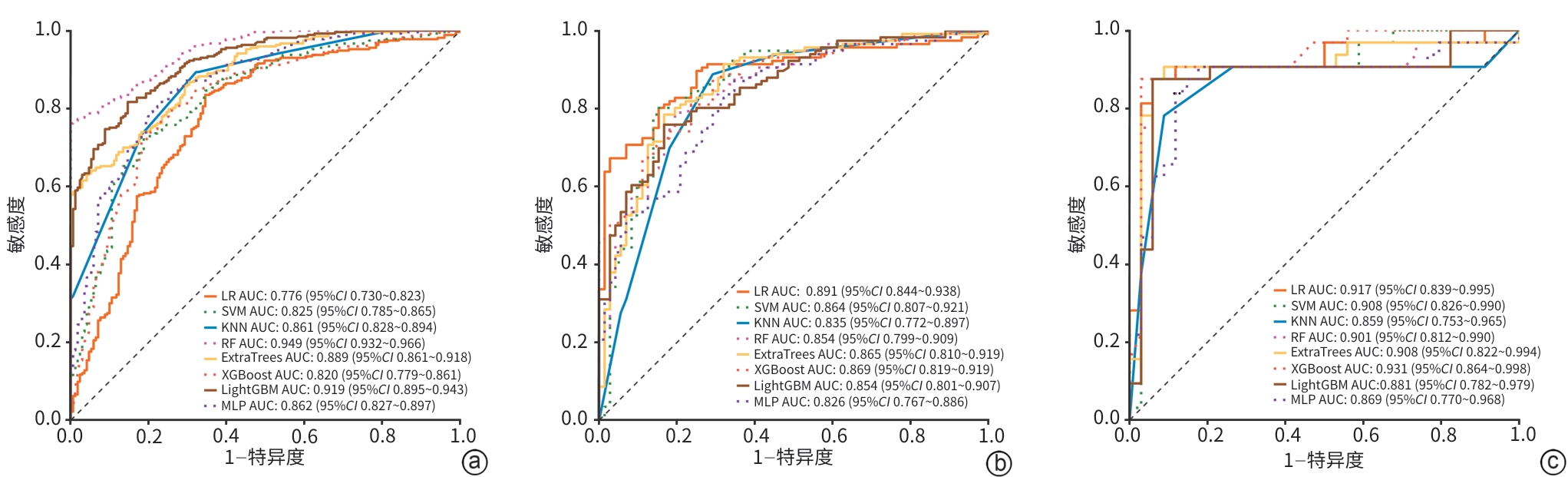
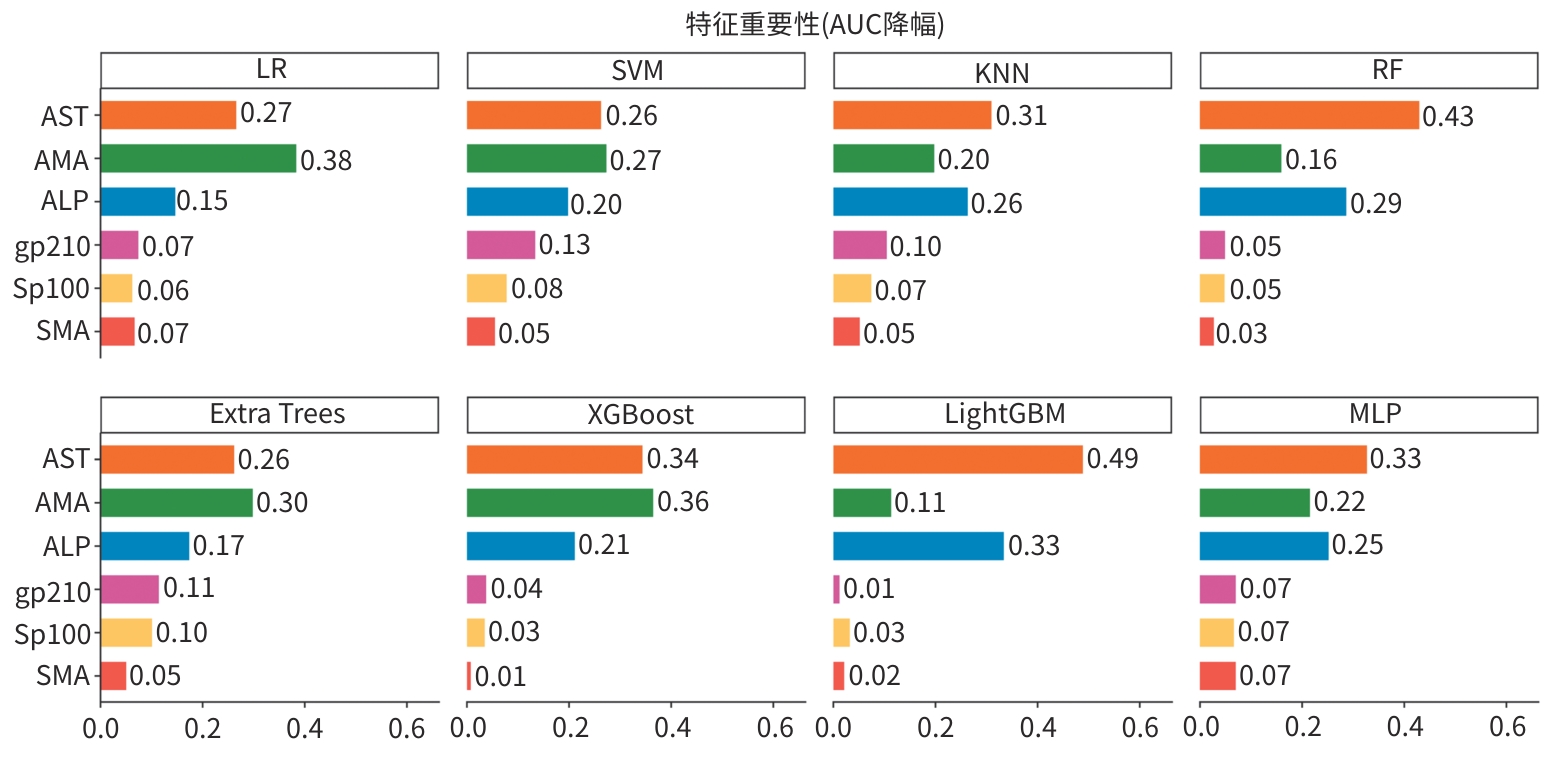
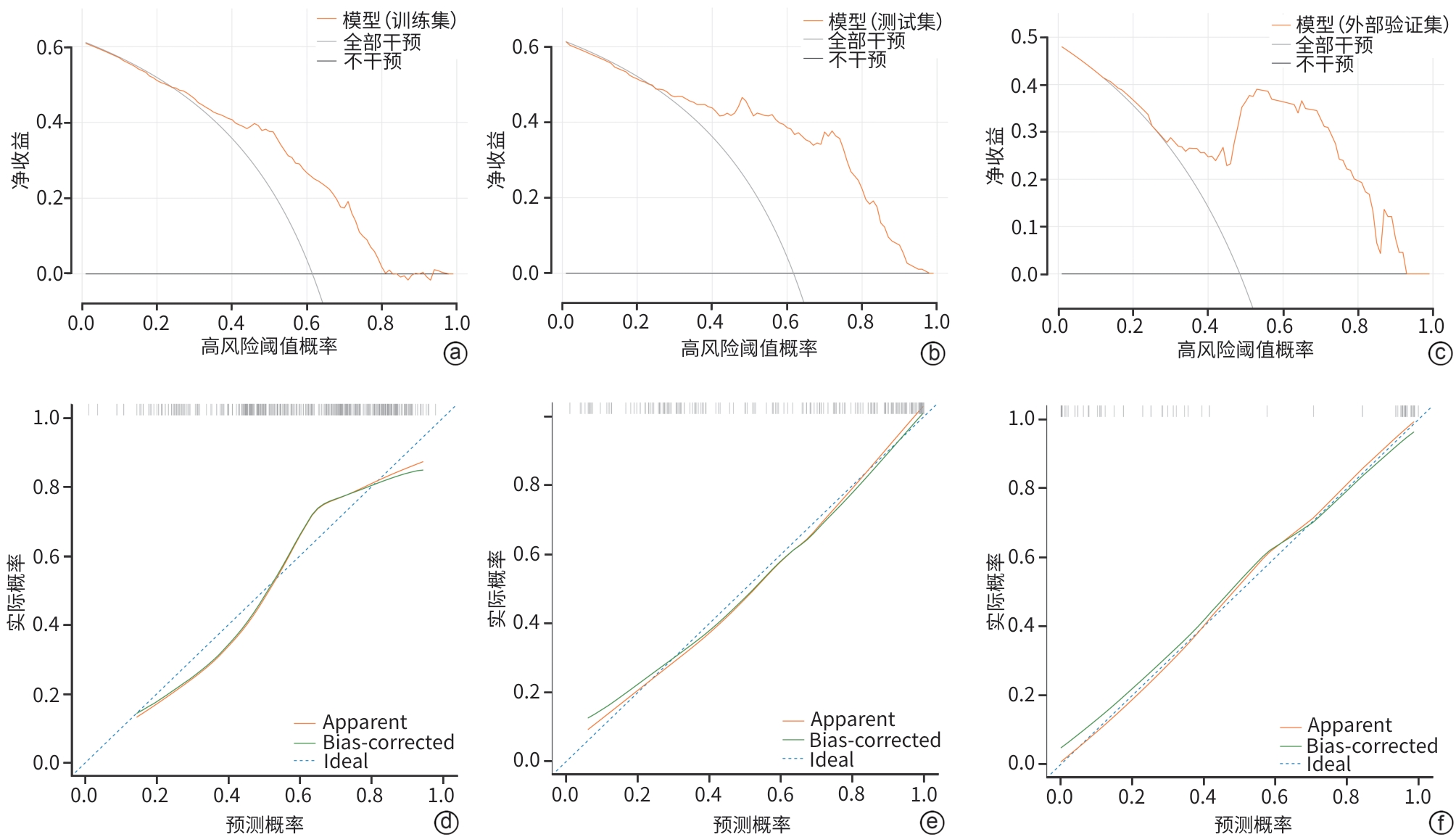
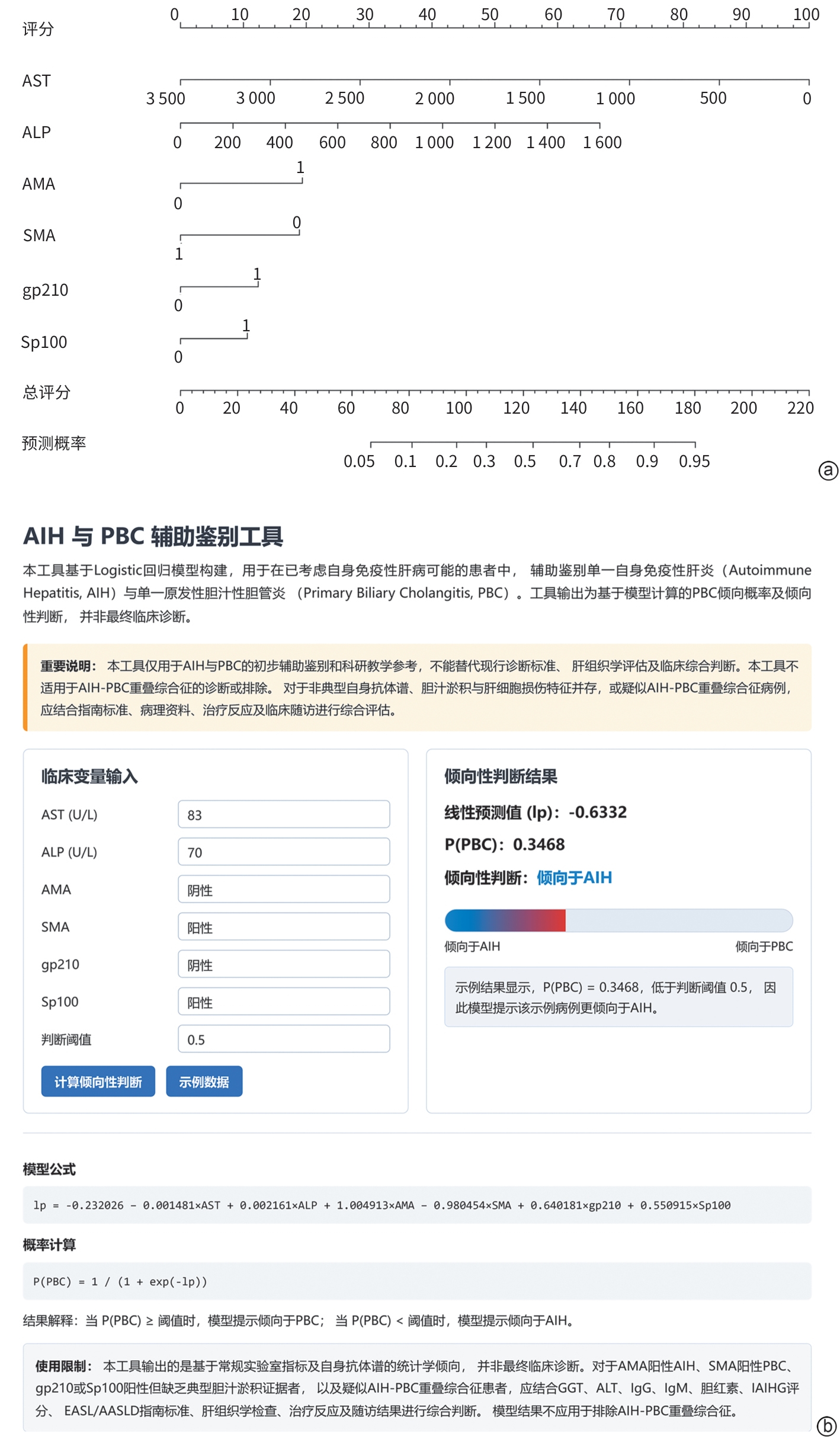
  •   Objective  To construct and investigate the performance of a model integrating routine laboratory parameters and autoantibody profiles in aiding the differentiation between autoimmune hepatitis (AIH) and primary biliary cholangitis (PBC), and to develop a visual tool based on this model.  Methods  This multicenter retrospective study was conducted among 632 patients who were diagnosed with AIH or PBC in Mengchao Hepatobiliary Hospital of Fujian Medical University from April 2017 to April 2024, among whom there were 243 patients with AIH and 389 patients with PBC. At a ratio of 7∶3 for stratified sampling, the patients were divided into a training set and a testing set. In addition, 66 patients who were diagnosed in The First Affiliated Hospital of Fujian Medical University during the same period of time were enrolled as the external validation set, among whom there were 33 patients with AIH and 33 patients with PBC. Routine laboratory parameters and autoantibody profiles were collected; with PBC as the outcome event, the univariate and multivariate Logistic regression analyses were performed in the training set to obtain the variables for model construction, and the odds ratio (OR) and its 95% confidence interval (CI) were reported. The selected variables were used to construct the Logistic regression, support vector machine, k-nearest neighbors, random forest, extremely randomized trees, extreme gradient boosting, light gradient boosting machine, and multilayer perceptron models, and the performance of these models was assessed in the testing set and the external validation set. The area under the receiver operating characteristic curve (AUC), calibration curve, and decision curve analysis were used to assess the discriminatory ability, calibration, and potential net clinical benefit of the models. A nomogram and a web-based tool for differentiation were developed based on the final model. The Wilcoxon rank-sum test was used for comparison of non-normally distributed continuous data between two groups, and the chi-square test or the Fisher’s exact test was used for comparison of categorical data between two groups.  Results  Compared with the PBC group, the AIH group had significantly higher levels of C-reactive protein, alanine aminotransferase, aspartate aminotransferase (AST), total bilirubin, direct bilirubin, immunoglobulin G, immunoglobulin A, and immunoglobulin G4, a significantly longer prothrombin time, a significantly higher international normalized ratio, and significantly lower levels of white blood cell count, platelet count, albumin, gamma-glutamyl transpeptidase, alkaline phosphatase (ALP), prothrombin activity, and immunoglobulin M (all P<0.05). There was a significant difference in the distribution of antinuclear antibody patterns between the two groups (P<0.001). Compared with the PBC group, the AIH group had significantly higher positive rates of smooth muscle antibody (SMA), anti-liver kidney microsomal type 1 antibody, and anti-soluble liver antigen antibody, and compared with the AIH group, the PBC group had significantly higher positive rates of antimitochondrial antibody (AMA), antimitochondrial M2 antibody, anti-gp210 antibody, and anti-Sp100 antibody (all P<0.05). The multivariate Logistic regression analysis showed that AST (OR=0.998, 95%CI: 0.997 — 1.000, P=0.017), ALP (OR=1.003, 95%CI: 1.001 — 1.005, P=0.018), AMA positivity (OR=2.431, 95%CI: 1.484 — 4.022, P<0.001), SMA positivity (OR=0.286, 95%CI: 0.121 — 0.625, P=0.003), anti-gp210 antibody positivity (OR=1.911, 95%CI: 1.062 — 3.576, P=0.036), and anti-Sp100 antibody positivity (OR=1.940, 95%CI: 1.111 — 3.500, P=0.023) were independent factors associated with disease classification. The Logistic regression model based on these variables achieved an AUC of 0.891 in the testing set and 0.917 in the external validation set. The calibration curve showed good consistency between predicted probabilities and observed outcomes, and the decision curve analysis showed that the model had potential clinical net benefit within a certain range of threshold probabilities. The nomogram and the web-based tool could display individualized predicted probability of PBC and indicate whether the model favored AIH or PBC.  Conclusion  The Logistic regression model based on AST, ALP, AMA, SMA, anti-gp210 antibody, and anti-Sp100 antibody shows good discriminatory ability in both the testing set and the external validation set, and therefore, it can provide quantitative support for the preliminary differentiation of AIH and PBC in clinical practice.


  • loading
  • [1]
    Chinese Society of Hepatology, Chinese Medical Association. Guidelines on the diagnosis and management of autoimmune hepatitis(2021)[J]. J Clin Hepatol, 2022, 38( 1): 42- 49. DOI: 10.3760/cma.j.cn112138-20211112-00796.

    中华医学会肝病学分会. 自身免疫性肝炎诊断和治疗指南(2021)[J]. 临床肝胆病杂志, 2022, 38( 1): 42- 49. DOI: 10.3760/cma.j.cn112138-20211112-00796.
    [2]
    Chinese Society of Hepatology, Chinese Medical Association. Guidelines on the diagnosis and management of primary biliary cholangitis(2021)[J]. J Clin Hepatol, 2022, 38( 1): 35- 41. DOI: 10.3760/cma.j.cn112138-20211112-00794.

    中华医学会肝病学分会. 原发性胆汁性胆管炎的诊断和治疗指南(2021)[J]. 临床肝胆病杂志, 2022, 38( 1): 35- 41. DOI: 10.3760/cma.j.cn112138-20211112-00794.
    [3]
    European Association for the Study of the Liver. EASL clinical practice Guidelines on the management of autoimmune hepatitis[J]. J Hepatol, 2025, 83( 2): 453- 501. DOI: 10.1016/j.jhep.2025.03.017.
    [4]
    Heneghan M A, Lohse A W. Update in clinical science: Autoimmune hepatitis[J]. J Hepatol, 2025, 82( 5): 926- 937. DOI: 10.1016/j.jhep.2024.12.041.
    [5]
    Ronca V, Davies S P, Oo Y H, et al. The immunological landscape of primary biliary cholangitis: Mechanisms and therapeutic prospects[J]. Hepatology, 2025, 82( 4): 877- 894. DOI: 10.1097/hep.0000000000001225.
    [6]
    Nevens F, Trauner M, Manns M P. Primary biliary cholangitis as a roadmap for the development of novel treatments for cholestatic liver diseases[J]. J Hepatol, 2023, 78( 2): 430- 441. DOI: 10.1016/j.jhep.2022.10.007.
    [7]
    Hirschfield G M, Dyson J K, Alexander G J M, et al. The British Society of Gastroenterology/UK-PBC primary biliary cholangitis treatment and management guidelines[J]. Gut, 2018, 67( 9): 1568- 1594. DOI: 10.1136/gutjnl-2017-315259.
    [8]
    Liberal R, Vergani D, Mieli-Vergani G. Update on autoimmune hepatitis[J]. J Clin Transl Hepatol, 2015, 3( 1): 42- 52. DOI: 10.14218/JCTH.2014.00032.
    [9]
    Terziroli Beretta-Piccoli B, Mieli-Vergani G, Vergani D. Autoimmune hepatitis: Serum autoantibodies in clinical practice[J]. Clin Rev Allergy Immunol, 2022, 63( 2): 124- 137. DOI: 10.1007/s12016-021-08888-9.
    [10]
    Leung K K, Hirschfield G M. Autoantibodies in primary biliary cholangitis[J]. Clin Liver Dis, 2022, 26( 4): 613- 627. DOI: 10.1016/j.cld.2022.06.004.
    [11]
    Topol E J. High-performance medicine: The convergence of human and artificial intelligence[J]. Nat Med, 2019, 25( 1): 44- 56. DOI: 10.1038/s41591-018-0300-7.
    [12]
    Beam A L, Kohane I S. Big data and machine learning in health care[J]. JAMA, 2018, 319( 13): 1317- 1318. DOI: 10.1001/jama.2017.18391.
    [13]
    Lammers W J, van Buuren H R, Hirschfield G M, et al. Levels of alkaline phosphatase and bilirubin are surrogate end points of outcomes of patients with primary biliary cirrhosis: An international follow-up study[J]. Gastroenterology, 2014, 147( 6): 1338- 1349.e5. DOI: 10.1053/j.gastro.2014.08.029.
    [14]
    Colapietro F, Lleo A, Generali E. Antimitochondrial antibodies: From bench to bedside[J]. Clin Rev Allergy Immunol, 2022, 63( 2): 166- 177. DOI: 10.1007/s12016-021-08904-y.
    [15]
    Wang C, Zheng X D, Jiang P, et al. Genome-wide association studies of specific antinuclear autoantibody subphenotypes in primary biliary cholangitis[J]. Hepatology, 2019, 70( 1): 294- 307. DOI: 10.1002/hep.30604.
    [16]
    Healey R, Corless L, Gordins P, et al. Do anti-smooth muscle antibodies predict development of autoimmune hepatitis in patients with normal liver function?- A retrospective cohort review[J]. Autoimmun Rev, 2016, 15( 7): 668- 672. DOI: 10.1016/j.autrev.2016.03.001.
  • 加载中

Catalog

    通讯作者: 陈斌, bchen63@163.com
    • 1. 

      沈阳化工大学材料科学与工程学院 沈阳 110142

    1. 本站搜索
    2. 百度学术搜索
    3. 万方数据库搜索
    4. CNKI搜索

    Figures(4)  / Tables(3)

    Article Metrics

    Article views (47) PDF downloads(6) Cited by()
    Proportional views
    Related

    /

    DownLoad:  Full-Size Img  PowerPoint
    Return
    Return