中文|English
ISSN 1001-5256 (Print)
ISSN 2097-3497 (Online)
CN 22-1108/R
Volume 42 Issue 10
Oct.  2026
Turn off MathJax
Article Contents

Value of dynamic total cholesterol level in assessing the prognosis of patients with hepatitis B virus-related acute-on-chronic liver failure

DOI: 10.12449/JCH261017
Research funding:

National Natural Science Foundation of China (82170643)

More Information
  • Corresponding author: Meng Qinghua, meng_qh0805@ccmu.edu.cn (ORCID: 0000-0002-1989-4441)
  • Received Date: 2025-04-25
  • Accepted Date: 2025-07-10
  • Published Date: 2026-10-25
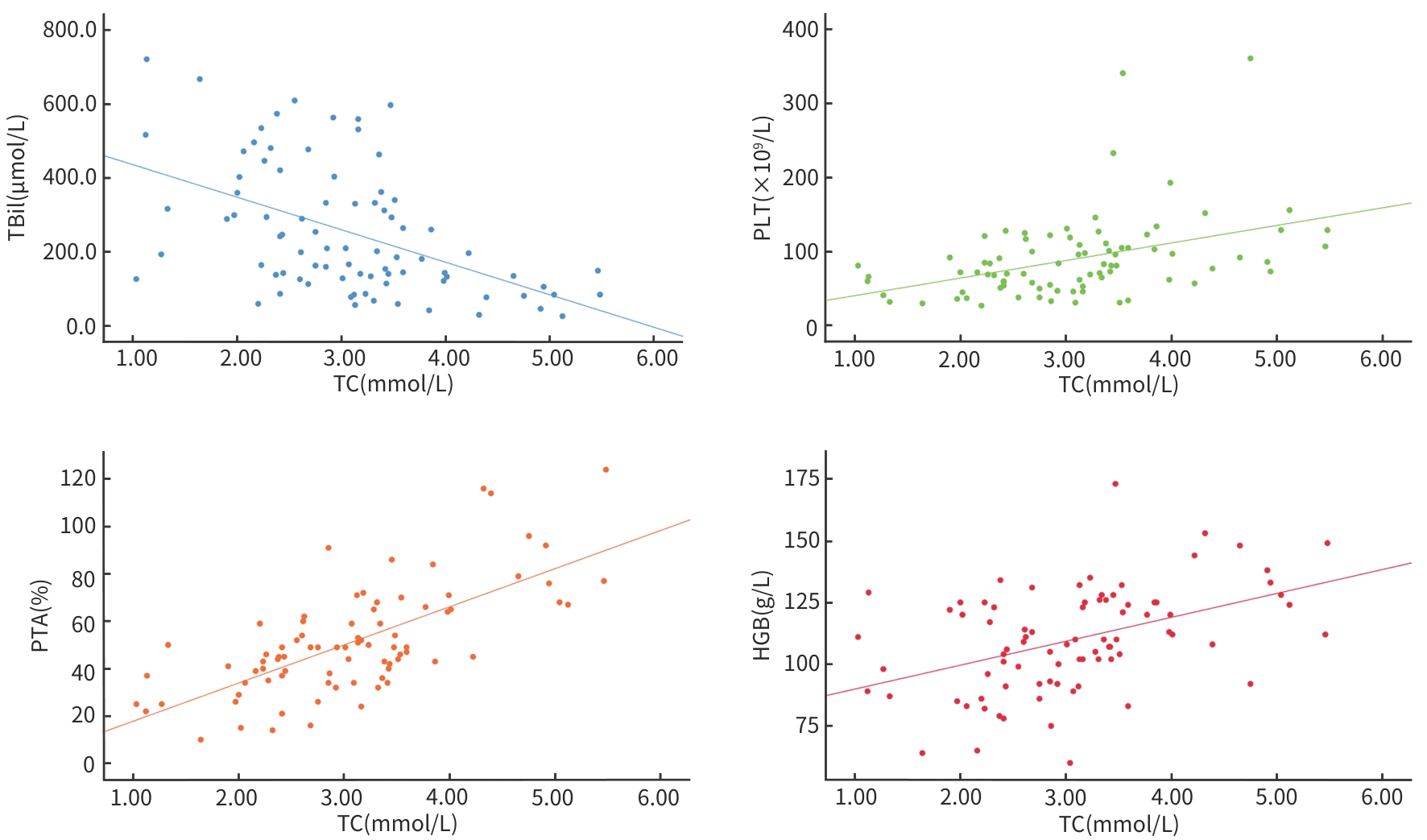
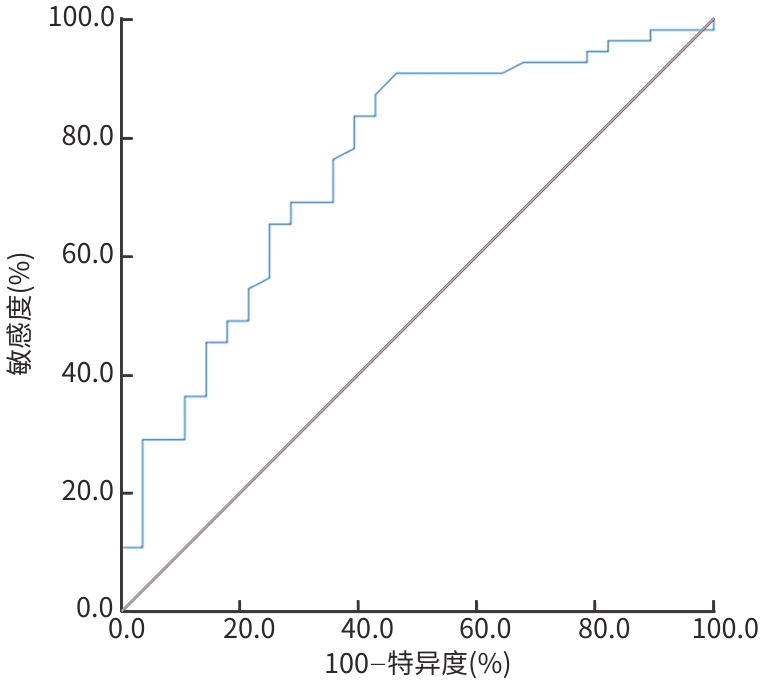
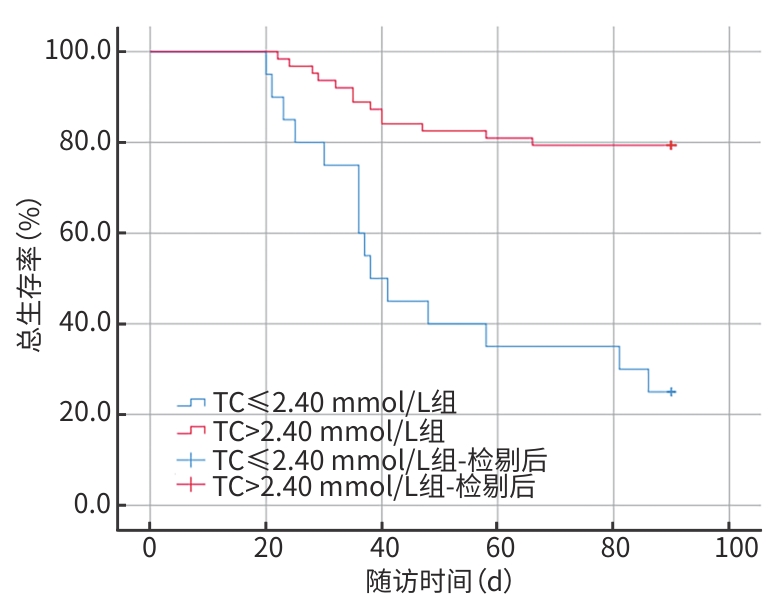
  •   Objective  To observe the dynamic change in total cholesterol (TC) level in patients with hepatitis B virus-related acute-on-chronic liver failure (HBV-ACLF), and investigate its association with prognosis.  Methods  A retrospective analysis was performed for the clinical data of 112 patients with HBV-ACLF who were admitted to Department of Hepatology, Beijing YouAn Hospital, Capital Medical University, from September 2012 to May 2021, and related data were collected, including TC, routine blood test results, blood biochemistry, and coagulation function. According to the 90-day prognosis of these patients, they were divided into a survival group and a death group. The dynamic changes of TC on days 1, 3, 7, 14, 21, and 28 were analyzed, and their association with prognosis was analyzed. The independent-samples t test was used for comparison of normally distributed measurement data between two groups; the Mann-Whitney U test was used for comparison of measurement data with skewed distribution between two groups; the chi-square test was used for comparison of categorical data between groups. The binary Logistic regression analysis was used to identify independent predictive factors. The Spearman correlation analysis was used to investigate the correlation between TC and each variable, and the repeated measures analysis of variance was used to compare the level of TC at different time points. The receiver operating characteristic (ROC) curve was used to assess the performance of TC in predicting the prognosis of HBV-ACLF, and Youden index was used to determine the optimal cut-off value. The Kaplan-Meier method was used to plot survival curves, and the Log-rank test was used for comparison between groups.  Results  The main effect of time on TC level in the 112 patients was statistically significant (F=7.424, P<0.001). There was a significant difference in TC level between the survival group and the death group (F=5.324, P=0.024). There was a significant interaction effect between time and group (F=9.865, P<0.001), suggesting that the dynamic evolution trajectory of TC presented different clinical trends in the two groups, with gradual improvement in the survival group and continuous deterioration or fluctuation in the death group. Among the 112 patients, 68 had a trend of increase in dynamic TC level, with a 28-day survival rate of 79.4% and a 90-day survival rate of 64.7%; 44 had a trend of reduction in dynamic TC level, with a 28-day survival rate of 52.3% and a 90-day survival rate of 25.0%; there was a significant difference in the survival rates between the two groups (χ2=9.158 and 16.852, both P<0.05). The multivariate Logistic regression analysis showed that TC level on day 21 (odds ratio=0.350, 95% confidence interval [CI]: 0.160 — 0.766, P=0.009) was an independent protective factor for the 90-day prognosis. TC level on day 21 was significantly positively correlated with prothrombin activity (r=0.647, P<0.01). The ROC curve analysis of TC level on day 21 for predicting prognosis showed an area under the ROC curve of 0.756 (95%CI: 0.643 — 0.868, P<0.001) and an optimal cut-off value of 2.40 mmol/L. Further analysis showed that the patients with TC>2.40 mmol/L on day 21 had a 28-day survival rate of 96.8%, and those with TC≤2.40 mmol/L had a 28-day survival rate of 80.0%; the patients with TC>2.40 mmol/L on day 21 had a 90-day survival rate of 79.4%, and those with TC≤2.40 mmol/L on day 21 had a 90-day survival rate of 25.0%, with a significant difference between these two groups of patients (χ2=4.145 and 20.071, both P<0.05).  Conclusion  TC level can be used as an assessment indicator for nutritional status in patients with HBV-ACLF, and dynamic monitoring of TC level has significant clinical significance for prognosis. Day 21 is a key time point for evaluating the prognosis of HBV-ACLF patients through TC monitoring, and TC>2.40 mmol/L can be used as an indicator for good prognosis in HBV-ACLF patients.


  • loading
  • [1]
    Karvellas C J, Bajaj J S, Kamath P S, et al. AASLD practice guidance on acute-on-chronic liver failure and the management of critically ill patients with cirrhosis[J]. Hepatology, 2024, 79( 6): 1463- 1502. DOI: 10.1097/HEP.0000000000000671.
    [2]
    Moreau R, Tonon M, Krag A, et al. EASL clinical practice guidelines on acute-on-chronic liver failure[J]. J Hepatol, 2023, 79( 2): 461- 491. DOI: 10.1016/j.jhep.2023.04.021.
    [3]
    Li J Q, Liang X, You S L, et al. Development and validation of a new prognostic score for hepatitis B virus-related acute-on-chronic liver failure[J]. J Hepatol, 2021, 75( 5): 1104- 1115. DOI: 10.1016/j.jhep.2021.05.026.
    [4]
    Choudhury A, Kulkarni A V, Arora V, et al. Acute-on-chronic liver failure(ACLF): The‘Kyoto consensus’-steps from Asia[J]. Hepatol Int, 2025, 19( 1): 1- 69. DOI: 10.1007/s12072-024-10773-4.
    [5]
    Singal A K, Wong R J, Dasarathy S, et al. ACG clinical guideline: Malnutrition and nutritional recommendations in liver disease[J]. Am J Gastroenterol, 2025, 120( 5): 950- 972. DOI: 10.14309/ajg.0000000000003379.
    [6]
    Wu Juan, Jia Lin, Li Yuanyuan, et al. Association of complications development with clinical prognosis in patients with HBV-related acute-on-chronic liver failure[J]. Beijing Med J, 2018, 40( 10): 907- 911.

    吴娟, 贾琳, 李元元, 等. HBV相关慢加急性肝衰竭患者的并发症与预后分析[J]. 北京医学, 2018, 40( 10): 907- 911.
    [7]
    Lai J C, Tandon P, Bernal W, et al. Malnutrition, frailty, and sarcopenia in patients with cirrhosis: 2021 practice guidance by the American Association for the Study of Liver Diseases[J]. Hepatology, 2021, 74( 3): 1611- 1644. DOI: 10.1002/hep.32049.
    [8]
    Meng Q H, Hou W, Yu H W, et al. Resting energy expenditure and substrate metabolism in patients with acute-on-chronic hepatitis B liver failure[J]. J Clin Gastroenterol, 2011, 45( 5): 456- 461. DOI: 10.1097/MCG.0b013e31820f7f02.
    [9]
    Society of Infectious Diseases, Chinese Medical Association. Expert consensus on diagnosis and treatment of end-stage liver disease complicated with infections(2021 version)[J]. J Clin Hepatol, 2022, 38( 2): 304- 310. DOI: 10.3969/j.issn.1001-5256.2022.02.010.

    中华医学会感染病学分会. 终末期肝病合并感染诊治专家共识(2021年版)[J]. 临床肝胆病杂志, 2022, 38( 2): 304- 310. DOI: 10.3969/j.issn.1001-5256.2022.02.010.
    [10]
    Lin Yong, Yan Gengjie, Feng Feng, et al. Association between cholesterol and liver regeneration and its significance and potential value in clinical treatment of liver failure[J]. J Clin Hepatol, 2022, 38( 3): 708- 713. DOI: 10.3969/j.issn.1001-5256.2022.03.044.

    林镛, 颜耿杰, 冯逢, 等. 胆固醇与肝再生关系及其在肝衰竭治疗中的意义和潜在价值[J]. 临床肝胆病杂志, 2022, 38( 3): 708- 713. DOI: 10.3969/j.issn.1001-5256.2022.03.044.
    [11]
    Alvarez-Sola G, Uriarte I, Latasa M U, et al. Bile acids, FGF15/19 and liver regeneration: From mechanisms to clinical applications[J]. Biochim Biophys Acta BBA Mol Basis Dis, 2018, 1864( 4): 1326- 1334. DOI: 10.1016/j.bbadis.2017.06.025.
    [12]
    de Giorgi M, Jarrett K E, Burton J C, et al. Depletion of essential isoprenoids and ER stress induction following acute liver-specific deletion of HMG-CoA reductase[J]. J Lipid Res, 2020, 61( 12): 1675- 1686. DOI: 10.1194/jlr.RA120001006.
    [13]
    Fuchs C D, Simbrunner B, Baumgartner M, et al. Bile acid metabolism and signalling in liver disease[J]. J Hepatol, 2025, 82( 1): 134- 153. DOI: 10.1016/j.jhep.2024.09.032.
    [14]
    Guan Min, Li Jiani, Gao Yinjie, et al. Value of blood lipid parameters in predicting the progression of HBV-related acute-on-chronic pre-liver failure[J]. J Clin Hepatol, 2023, 39( 7): 1564- 1569. DOI: 10.3969/j.issn.1001-5256.2023.07.009.

    官敏, 李嘉妮, 高银杰, 等. 血脂指标对乙型肝炎相关慢加急性肝衰竭前期进展的预测价值[J]. 临床肝胆病杂志, 2023, 39( 7): 1564- 1569. DOI: 10.3969/j.issn.1001-5256.2023.07.009.
    [15]
    Wang Hang, Sun Changfeng, He Chuan, et al. Predictive value of blood lipid level on short-term prognosis of HBV-related patients with chronic and acute liver failure[J]. Shandong Med J, 2022, 62( 8): 74- 77.

    王航, 孙长峰, 何川, 等. 血脂水平对HBV相关慢加急性肝衰竭患者短期预后的预测价值[J]. 山东医药, 2022, 62( 8): 74- 77.
    [16]
    Wu Fengping, Li Yaping, Yang Ying, et al. Blood glucose and total cholesterol in the prognosis of patients with liver failure[J]. J Pract Hepatol, 2018, 21( 3): 413- 416. DOI: 10.3969/j.issn.1672-5069.2018.03.024.

    吴凤萍, 李亚萍, 杨颖, 等. 血糖和总胆固醇水平对肝衰竭患者预后的影响[J]. 实用肝脏病杂志, 2018, 21( 3): 413- 416. DOI: 10.3969/j.issn.1672-5069.2018.03.024.
  • 加载中

Catalog

    通讯作者: 陈斌, bchen63@163.com
    • 1. 

      沈阳化工大学材料科学与工程学院 沈阳 110142

    1. 本站搜索
    2. 百度学术搜索
    3. 万方数据库搜索
    4. CNKI搜索

    Figures(3)  / Tables(5)

    Article Metrics

    Article views (57) PDF downloads(4) Cited by()
    Proportional views
    Related

    /

    DownLoad:  Full-Size Img  PowerPoint
    Return
    Return