PDF下载 ( 907 KB)

纳米囊泡递送系统在肝癌治疗中的应用
DOI: 10.12449/JCH260631
利益冲突声明:本文不存在任何利益冲突。
作者贡献声明:马惠负责课题设计,撰写论文;马艳花、马春霞负责修改论文;田旭东负责拟定写作思路,指导撰写文章并最后定稿。
-
摘要: 肝癌是全球高发的恶性肿瘤,传统放化疗存在靶向性差、毒副作用显著等局限,纳米囊泡递送系统因良好的生物相容性与靶向潜力成为研究焦点。本文介绍了纳米囊泡的基本特性及主要类型,详细探讨其靶向肝脏的机制,深入分析其在肝癌治疗中的应用潜力及研究进展,同时展望当前面临的挑战与未来发展趋势,旨在为纳米囊泡在肝癌靶向治疗领域的进一步研究与临床应用提供系统的参考依据。Abstract: Liver cancer is one of the most prevalent malignant tumors worldwide. Conventional radiotherapy and chemotherapy are often limited by poor targeting efficiency and significant adverse effects. Nanovesicle delivery systems have emerged as a research hotspot due to their superior biocompatibility and targeting potential. This article introduces the fundamental characteristics and main types of nanovesicles, elaborates on their mechanisms in targeting the liver, deeply analyzes their application potential in the treatment of liver cancer and related research advances, and discusses future challenges and development trends, in order to provide a reference for further research and clinical application of nanovesicles in targeted therapy for liver cancer.
-
Key words:
- Liver Neoplasms /
- Liposomes /
- Therapeutics
-
[1] CADINOIU AN, RATA DM, ATANASE LI, et al. Formulations based on drug loaded aptamer-conjugated liposomes as a viable strategy for the topical treatment of basal cell carcinoma-In vitro tests[J]. Pharmaceutics, 2021, 13( 6): 866. DOI: 10.3390/pharmaceutics13060866. [2] LAI F, CADDEO C, MANCA ML, et al. What’s new in the field of phospholipid vesicular nanocarriers for skin drug delivery[J]. Int J Pharm, 2020, 583: 119398. DOI: 10.1016/j.ijpharm.2020.119398. [3] ALLEN TM, SAPRA P, MOASE E. Use of the post-insertion method for the formation of ligand-coupled liposomes[J]. Cell Mol Biol Lett, 2002, 7( 3): 889- 894. [4] van NIEL G, D’ANGELO G, RAPOSO G. Shedding light on the cell biology of extracellular vesicles[J]. Nat Rev Mol Cell Biol, 2018, 19( 4): 213- 228. DOI: 10.1038/nrm.2017.125. [5] CHEN XL, YANG FQ. Classification and nomenclature of extracellular vesicles[M]// Extracellular Vesicles. Singapore: Springer Nature Singapore, 2024: 3- 7. DOI: 10.1007/978-981-99-8365-0_1. [6] MIAO WG, ZHOU JY, HAN RQ. Analysis of global liver cancer statistics[J]. Chin J Epidemiol, 2024, 45( 6): 865- 869. DOI: 10.3760/cma.j.cn112338-20231027-00251.缪伟刚, 周金意, 韩仁强. 全球肝癌流行数据解析[J]. 中华流行病学杂志, 2024, 45( 6): 865- 869. DOI: 10.3760/cma.j.cn112338-20231027-00251. [7] ZHAO Q, FENG JJ, LIU FB, et al. Rhizoma Drynariae-derived nanovesicles reverse osteoporosis by potentiating osteogenic differentiation of human bone marrow mesenchymal stem cells via targeting ERα signaling[J]. Acta Pharm Sin B, 2024, 14( 5): 2210- 2227. DOI: 10.1016/j.apsb.2024.02.005. [8] YU CH, LIU YQ, YU XT, et al. Garlic-derived exosome-like nanovesicles: A promising natural nanotherapy for periodontitis via PHGDH/PI3K/AKT-mediated metabolic and inflammatory regulation[J]. Int J Nanomedicine, 2025, 20: 5551- 5572. DOI: 10.2147/IJN.S510417. [9] WEN FP, HAN Y, ZHANG H, et al. Epstein-Barr virus infection upregulates extracellular OLFM4 to activate YAP signaling during gastric cancer progression[J]. Nat Commun, 2024, 15( 1): 10543. DOI: 10.1038/s41467-024-54850-6. [10] WANG CL, ZHANG GH, CHEN X, et al. Mechanism of traditional Chinese medicine in the prevention and treatment of colorectal cancer liver metastasis based on tumor exosomes[J]. World Chin Med, 2024, 19( 7): 1056- 1062. DOI: 10.3969/j.issn.1673-7202.2024.07.026.王成磊, 张广辉, 陈雪, 等. 基于肿瘤外泌体探讨中医药防治大肠癌肝转移机制[J]. 世界中医药, 2024, 19( 7): 1056- 1062. DOI: 10.3969/j.issn.1673-7202.2024.07.026. [11] VÁZQUEZ-RÍOS AJ, MOLINA-CRESPO Á, BOUZO BL, et al. Exosome-mimetic nanoplatforms for targeted cancer drug delivery[J]. J Nanobiotechnology, 2019, 17( 1): 85. DOI: 10.1186/s12951-019-0517-8. [12] YU MH, JAMBHRUNKAR S, THORN P, et al. Hyaluronic acid modified mesoporous silica nanoparticles for targeted drug delivery to CD44-overexpressing cancer cells[J]. Nanoscale, 2013, 5( 1): 178- 183. DOI: 10.1039/c2nr32145a. [13] THALIJ KM, YOU HW, AHER KB, et al. Advances in lipid-based nanomedicine: Pathway specific siRNA therapy and optimizing delivery for hepatocellular carcinoma[J]. Int J Nanomed, 2025, 20: 10541- 10566. DOI: 10.2147/IJN.S532246. [14] KALLURI R, LEBLEU VS. The biology, function, and biomedical applications of exosomes[J]. Science, 2020, 367( 6478): eaau6977. DOI: 10.1126/science.aau6977. [15] YOU Q, LIANG FM, WU GG, et al. The landscape of biomimetic nanovesicles in brain diseases[J]. Adv Mater, 2024, 36( 7): 2306583. DOI: 10.1002/adma.202306583. [16] HUANG CY, LI WX, JIANG S, et al. Application of mesenchymal stem cell-derived exosomes in liver regeneration[J/OL]. Chin J Transplant(Electronic Edition), 2025, 19( 4): 268- 273. DOI: 10.3877/cma.j.issn.1674-3903.2025.04.010.黄淳雨, 李文馨, 蒋上, 等. 间充质干细胞来源外泌体在肝再生领域的应用[J/OL]. 中华移植杂志(电子版), 2025, 19( 4): 268- 273. DOI: 10.3877/cma.j.issn.1674-3903.2025.04.010. [17] WANG ZR, LI WP, JIANG YH, et al. A sphingolipid-derived paclitaxel nanovesicle enhances efficacy of combination therapies in triple-negative breast cancer and pancreatic cancer[J]. Nat Cancer, 2025, 6( 10): 1734- 1753. DOI: 10.1038/s43018-025-01029-7. [18] LOU SY, HU W, WEI PY, et al. Artificial nanovesicles derived from cells: A promising alternative to extracellular vesicles[J]. ACS Appl Mater Interfaces, 2025, 17( 1): 22- 41. DOI: 10.1021/acsami.4c12567. [19] YANG ZG, SHI JF, XIE J, et al. Large-scale generation of functional mRNA-encapsulating exosomes via cellular nanoporation[J]. Nat Biomed Eng, 2020, 4( 1): 69- 83. DOI: 10.1038/s41551-019-0485-1. [20] LIN QX, WEN YY, PENG YY, et al. Cancer cell-coated PLGA nanoparticles loaded with sorafenib and spions for hepatocellular carcinoma theranostics[J]. Curr Drug Deliv, 2025. DOI: 10.2174/0115672018377065250717004240. [21] LEI YG, YAO J, ZHENG J, et al. Human umbilical cord mesenchymal stem cell-derived extracellular vesicles enhance the regenerative capability of fibrotic liver[J]. Organ Transplant, 2023, 14( 3): 379- 388. DOI: 10.3969/j.issn.1674-7445.2023.03.009.雷耘果, 姚嘉, 郑俊, 等. 人脐带间充质干细胞来源的细胞外囊泡增强纤维化肝脏再生能力[J]. 器官移植, 2023, 14( 3): 379- 388. DOI: 10.3969/j.issn.1674-7445.2023.03.009. [22] LI P, WANG MR. Research progress on the role of miR-122 in the regulation of liver diseases[J]. J Clin Hepatol, 2010, 13( 5): 397- 400. DOI: 10.3969/j.issn.1672-5069.2010.05.037.李平, 汪茂荣. miR-122在肝脏疾病调控中的作用研究进展[J]. 实用肝脏病杂志, 2010, 13( 5): 397- 400. DOI: 10.3969/j.issn.1672-5069.2010.05.037. [23] CHEN C, XIAO JQ, SUI X, et al. Protective effect and mechanism of mesenchymal stem cell-derived extracellular vesicle on radiation-induced liver injury[J]. Organ Transplant, 2023, 14( 3): 411- 419. DOI: 10.3969/j.issn.1674-7445.2023.03.013.陈池, 萧家麒, 隋昕, 等. 间充质干细胞来源的细胞外囊泡对放射性肝损伤的保护作用及其机制研究[J]. 器官移植, 2023, 14( 3): 411- 419. DOI: 10.3969/j.issn.1674-7445.2023.03.013. [24] LEE J, KIM SR, LEE C, et al. Extracellular vesicles from in vivo liver tissue accelerate recovery of liver necrosis induced by carbon tetrachloride[J]. J Extracell Vesicles, 2021, 10( 10): e12133. DOI: 10.1002/jev2.12133. [25] GUO N, WANG Y, WEN ZF, et al. Promising nanotherapeutics of stem cell extracellular vesicles in liver regeneration[J]. Regen Ther, 2024, 26: 1037- 1047. DOI: 10.1016/j.reth.2024.09.016. [26] PARTHASARATHY G, HIRSOVA P, KOSTALLARI E, et al. Extracellular vesicles in hepatobiliary health and disease[J]. Compr Physiol, 2023, 13( 3): 4631- 4658. DOI: 10.1002/cphy.c210046. [27] DEVHARE PB, RAY RB. Extracellular vesicles: Novel mediator for cell to cell communications in liver pathogenesis[J]. Mol Aspects Med, 2018, 60: 115- 122. DOI: 10.1016/j.mam.2017.11.001. [28] JIANG SS, TIAN SY, WANG PN, et al. Native and engineered extracellular vesicles: Novel tools for treating liver disease[J]. J Mater Chem B, 2024, 12( 16): 3840- 3856. DOI: 10.1039/d3tb01921g. [29] ZHANG GS, HUANG XF, XIU HQ, et al. Extracellular vesicles: Natural liver-accumulating drug delivery vehicles for the treatment of liver diseases[J]. J Extracell Vesicles, 2020, 10( 2): e12030. DOI: 10.1002/jev2.12030. [30] VALE N, PEREIRA M, MENDES RA. Systemic inflammatory disorders, immunosuppressive treatment and increase risk of head and neck cancers-a narrative review of potential physiopathological and biological mechanisms[J]. Cells, 2023, 12( 17): 2192. DOI: 10.3390/cells12172192. [31] LIU BL, NGUYEN PL, YU H, et al. Honey vesicle-like nanoparticles protect aged liver from non-alcoholic steatohepatitis[J]. Acta Pharm Sin B, 2024, 14( 8): 3661- 3679. DOI: 10.1016/j.apsb.2024.05.002. [32] SHEN Q, LIU YJ, LI JK, et al. Nano-selenium modulates NF-κB/NLRP3 pathway and mitochondrial dynamics to attenuate microplastic-induced liver injury[J]. Nutrients, 2024, 16( 22): 3878. DOI: 10.3390/nu16223878. [33] SHEGEFTI S, BOLORI S, NABAVI-RAD A, et al. Helicobacter pylori-derived outer membrane vesicles suppress liver autophagy: A novel mechanism for H. pylori-mediated hepatic disorder[J]. Microb Pathog, 2023, 183: 106319. DOI: 10.1016/j.micpath.2023.106319. [34] BRAY F, LAVERSANNE M, SUNG H, et al. Global cancer statistics 2022: GLOBOCAN estimates of incidence and mortality worldwide for 36 cancers in 185 countries[J]. CA Cancer J Clin, 2024, 74( 3): 229- 263. DOI: 10.3322/caac.21834. [35] RUMGAY H, FERLAY J, DE MARTEL C, et al. Global, regional and national burden of primary liver cancer by subtype[J]. Eur J Cancer, 2022, 161: 108- 118. DOI: 10.1016/j.ejca.2021.11.023. [36] BUCHARD B, TEILHET C, ABEYWICKRAMA SAMARAKOON N, et al. Two metabolomics phenotypes of human hepatocellular carcinoma in non-alcoholic fatty liver disease according to fibrosis severity[J]. Metabolites, 2021, 11( 1): 54. DOI: 10.3390/metabo11010054. [37] HAMMOUTENE A, RAUTOU PE. Role of liver sinusoidal endothelial cells in non-alcoholic fatty liver disease[J]. J Hepatol, 2019, 70( 6): 1278- 1291. DOI: 10.1016/j.jhep.2019.02.012. [38] YIN X, LI YW, ZHANG BH, et al. Coexpression of stemness factors Oct4 and nanog predict liver resection[J]. Ann Surg Oncol, 2012, 19( 9): 2877- 2887. DOI: 10.1245/s10434-012-2314-6. [39] LEHRICH BM, DELGADO ER. Lipid nanovesicle platforms for hepatocellular carcinoma precision medicine therapeutics: Progress and perspectives[J]. Organogenesis, 2024, 20( 1): 2313696. DOI: 10.1080/15476278.2024.2313696. [40] WANG HL, THORLING CA, LIANG XW, et al. Diagnostic imaging and therapeutic application of nanoparticles targeting the liver[J]. J Mater Chem B, 2015, 3( 6): 939- 958. [41] IDÉE JM, GUIU B. Use of Lipiodol as a drug-delivery system for transcatheter arterial chemoembolization of hepatocellular carcinoma: A review[J]. Crit Rev Oncol Hematol, 2013, 88( 3): 530- 549. DOI: 10.1016/j.critrevonc.2013.07.003. [42] KANG JH, TOITA R, MURATA M. Liver cell-targeted delivery of therapeutic molecules[J]. Crit Rev Biotechnol, 2016, 36( 1): 132- 143. DOI: 10.3109/07388551.2014.930017. [43] QIN CF, ZHAO YL, LONG LJ, et al. Mechanism of cytotoxic T lymphocyte-derived exosomes inhibiting hepatic stellate cell activation[J]. J Clin Hepatol, 2023, 39( 10): 2340- 2347. DOI: 10.3969/j.issn.1001-5256.2023.10.011.覃川福, 赵雅丽, 龙丽娟, 等. 细胞毒性T淋巴细胞来源外泌体抑制肝星状细胞活化的机制[J]. 临床肝胆病杂志, 2023, 39( 10): 2340- 2347. DOI: 10.3969/j.issn.1001-5256.2023.10.011. [44] NIU YM, ZHU JH, LI Y, et al. Size shrinkable drug delivery nanosystems and priming the tumor microenvironment for deep intratumoral penetration of nanoparticles[J]. J Control Release, 2018, 277: 35- 47. DOI: 10.1016/j.jconrel.2018.03.012. [45] KUSEC R. Exosomes in heme malignancies and pre-cancerous states[J]. Hematol Transfus Cell Ther, 2020, 42: 16. DOI: 10.1016/j.htct.2020.09.031. [46] WANG J, YANG YL, LU JY, et al. The role of exosomes in therapeutic resistance of hepatocellular carcinoma[J]. Hepatoma Res, 2023, 9: 46. DOI: 10.20517/2394-5079.2023.85. [47] YANG X, XIE X, XIAO YF, et al. The emergence of long non-coding RNAs in the tumorigenesis of hepatocellular carcinoma[J]. Cancer Lett, 2015, 360( 2): 119- 124. DOI: 10.1016/j.canlet.2015.02.035. [48] RAMOS-SANTILLAN V, OSHI M, NELSON E, et al. High Ki67 gene expression is associated with aggressive phenotype in hepatocellular carcinoma[J]. World J Oncol, 2024, 15( 2): 257- 267. DOI: 10.14740/wjon1751. [49] SANTHEKADUR PK, SHIRAGANNAVAR VD, GOWDA NGS, et al. Withaferin a acts as a novel ligand and regulator of liver X receptor-α in hepatocellular carcinoma[J]. J Clin Exp Hepatol, 2022, 12: S6- S7. DOI: 10.1016/j.jceh.2021.10.089. [50] WU YY, YU LSY, ZHOU HY, et al. Effect of HepG2-derived exosome with PDGF-D knockdown on transformation of normal fibroblasts into tumor-associated fibroblasts in liver cancer[J]. Front Biosci, 2025, 30( 3): 26045. DOI: 10.31083/FBL26045. [51] THAN NN, NEWSOME PN. Stem cells for liver regeneration[J]. QJM, 2014, 107( 6): 417- 421. DOI: 10.1093/qjmed/hcu013. [52] WANG GW, WU BH, LI QY, et al. Active transportation of liposome enhances tumor accumulation, penetration, and therapeutic efficacy[J]. Small, 2020, 16( 44): 2004172. DOI: 10.1002/smll.202004172. [53] YIN XY, ZHAO XY, SHEN YM, et al. Nanoparticle-mediated dual targeting of stromal and immune components to overcome fibrotic and immunosuppressive barriers in hepatocellular carcinoma[J]. J Control Release, 2025, 383: 113783. DOI: 10.1016/j.jconrel.2025.113783. [54] ZHOU FL, TENG FF, DENG PZ, et al. Recent progress of nano-drug delivery system for liver cancer treatment[J]. Anticancer Agents Med Chem, 2018, 17( 14): 1884- 1897. DOI: 10.2174/1871520617666170713151149. [55] ZHI DF, ZHAO YN, CUI SH, et al. Conjugates of small targeting molecules to non-viral vectors for the mediation of siRNA[J]. Acta Biomater, 2016, 36: 21- 41. DOI: 10.1016/j.actbio.2016.03.048. [56] LU SJ, LI GF. Research progress of nano-drug delivery systems based on the characteristics of microenvironment in the treatment of liver cancer[J]. Chin Pharm J, 2023, 58( 16): 1447- 1456. DOI: 10.11669/cpj.2023.16.002.路诗佳, 李国飞. 基于微环境特点构建的纳米递药系统在肝癌治疗中的研究进展[J]. 中国药学杂志, 2023, 58( 16): 1447- 1456. DOI: 10.11669/cpj.2023.16.002. [57] WU WT, HU QD, WANG M, et al. A PEGylated megamer-based microRNA delivery system activatable by stepwise microenvironment stimulation[J]. Chem Commun, 2019, 55( 63): 9363- 9366. DOI: 10.1039/c9cc03846a. [58] GARLAND J. Unravelling the complexity of signalling networks in cancer: A review of the increasing role for computational modelling[J]. Crit Rev Oncol, 2017, 117: 73- 113. DOI: 10.1016/j.critrevonc.2017.06.004. [59] ŠEGOTA S, TEŽAK D. Spontaneous formation of vesicles[J]. Adv Colloid Interface Sci, 2006, 121( 1-3): 51- 75. DOI: 10.1016/j.cis.2006.01.002. [60] NOLTE-’T HOEN ENM, WAUBEN MHM. Immune cell-derived vesicles: Modulators and mediators of inflammation[J]. Curr Pharm Des, 2012, 18( 16): 2357- 2368. DOI: 10.2174/138161212800166013. [61] BILIA AR, BERGONZI MC, GUCCIONE C, et al. Vesicles and micelles: Two versatile vectors for the delivery of natural products[J]. J Drug Deliv Sci Technol, 2016, 32: 241- 255. DOI: 10.1016/j.jddst.2015.09.007. [62] SHRINGIRISHI M, PRAJAPATI SK, MAHOR A, et al. Nanosponges: A potential nanocarrier for novel drug delivery-a review[J]. Asian Pac J Trop Dis, 2014, 4: S519- S526. DOI: 10.1016/S2222-1808(14)60667-8. [63] SAMARIDOU E, ALONSO MJ. Nose-to-brain peptide delivery-The potential of nanotechnology[J]. Bioorg Med Chem, 2018, 26( 10): 2888- 2905. DOI: 10.1016/j.bmc.2017.11.001. [64] PENG Y, BARIWAL J, KUMAR V, et al. Organic nanocarriers for delivery and targeting of therapeutic agents for cancer treatment[J]. Adv Ther, 2020, 3( 2): 1900136. DOI: 10.1002/adtp.201900136. [65] PUSHPALATHA R, SELVAMUTHUKUMAR S, KILIMOZHI D. Nanocarrier mediated combination drug delivery for chemotherapy-A review[J]. J Drug Deliv Sci Technol, 2017, 39: 362- 371. DOI: 10.1016/j.jddst.2017.04.019. [66] SHAO YK, CHEN T, ZHENG X, et al. Abstract 1103: Colorectal cancer-derived small extracellular vesicles establish an inflammatory premetastatic niche through macrophage polarization in liver metastasis[J]. Cancer Res, 2018, 78( 13_Supplement): 1103. DOI: 10.1158/1538-7445.am2018-1103. [67] ECKERLING A, RICON-BECKER I, SORSKI L, et al. Stress and cancer: Mechanisms, significance and future directions[J]. Nat Rev Cancer, 2021, 21( 12): 767- 785. DOI: 10.1038/s41568-021-00395-5. [68] CHEN ZY, JI PZ, HE QQ, et al. Research progress of different components of tertiary lymphoid structure on tumor immunity[J]. Chin J Pathol, 2025, 54( 4): 419- 424. DOI: 10.3760/cma.j.cn112151-20241011-00670.陈哲宇, 姬菩忠, 何倩倩, 等. 三级淋巴结构中不同成分对肿瘤免疫的研究进展[J]. 中华病理学杂志, 2025, 54( 4): 419- 424. DOI: 10.3760/cma.j.cn112151-20241011-00670. [69] TIONG TY, CHAN ML, WANG CH, et al. Exosomal miR-21 determines lung-to-brain metastasis specificity through the DGKB/ERK axis within the tumor microenvironment[J]. Life Sci, 2023, 329: 121945. DOI: 10.1016/j.lfs.2023.121945. -

 下载:
下载:
 本文二维码
本文二维码
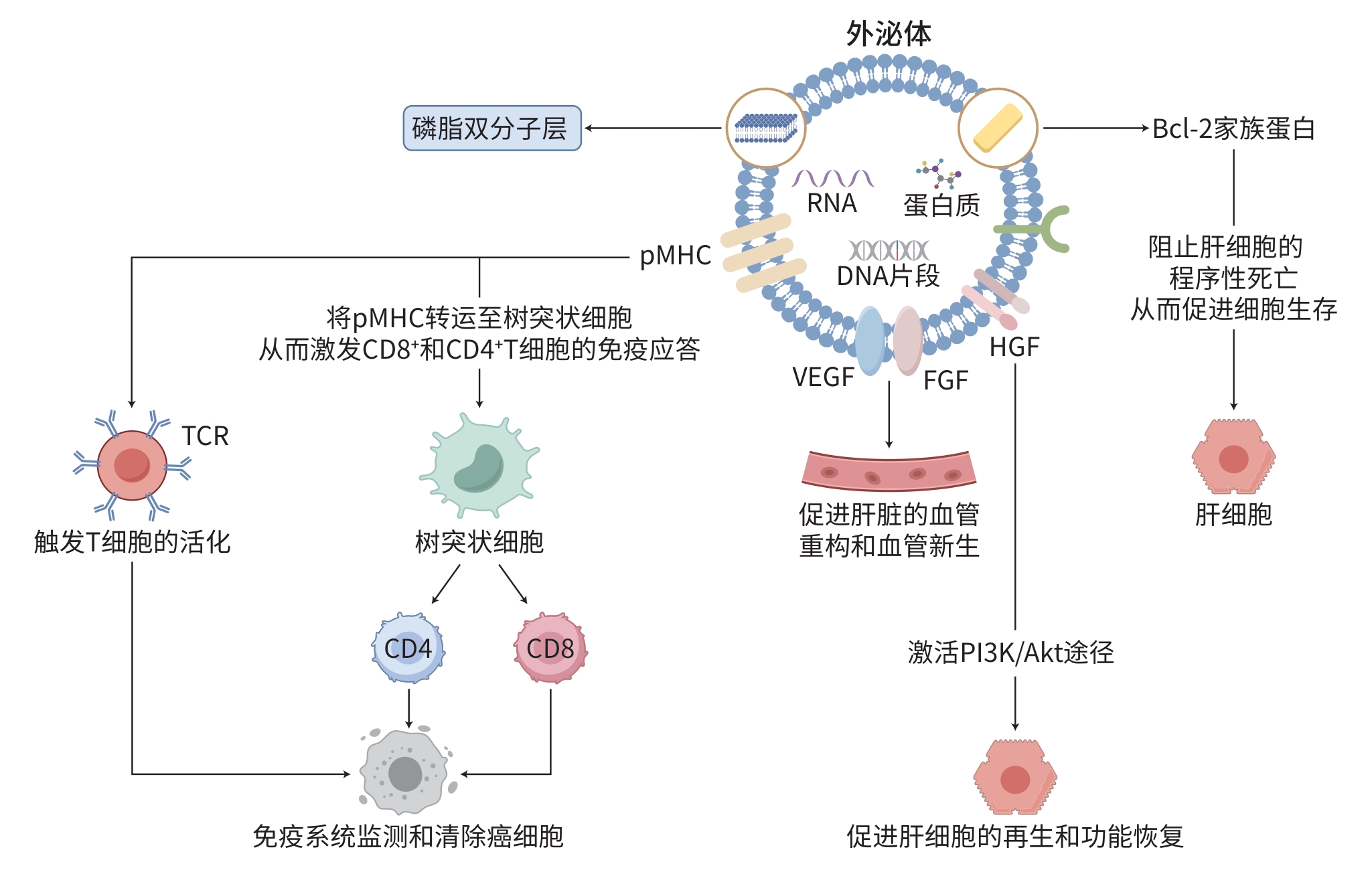
图(1)
计量
- 文章访问数: 395
- HTML全文浏览量: 104
- PDF下载量: 91
- 被引次数: 0