PDF下载 ( 1590 KB)

胰高血糖素样肽-1在肝硬化相关糖尿病发生中的作用及靶向治疗策略
DOI: 10.12449/JCH261030
利益冲突声明:本文不存在任何利益冲突。
作者贡献声明:李美川、刘玉娟和胡晗负责撰写文章;林世德负责审校及修改文章。
Role of glucagon-like peptide-1 in the development of liver cirrhosis-associated diabetes and targeted therapeutic strategies
-
摘要: 糖代谢紊乱是肝硬化患者常见并发症,其机制尚未完全阐明。肠促胰素,尤其是胰高血糖素样肽-1(GLP-1),在餐后血糖调控及2型糖尿病的发生发展中发挥重要作用。目前关于肝硬化患者循环GLP-1水平变化的结论尚不一致。相比之下,肝硬化患者肠促胰素效应减弱的证据较为一致,可能主要与胰腺β细胞对内源性GLP-1的促胰岛素分泌反应减弱有关。此外,临床证据提示GLP-1受体激动剂可能延缓不同病因肝硬化进展并改善预后。上述证据提示,GLP-1水平及肠促胰素效应异常可能参与肝硬化糖代谢紊乱及疾病进展。本文对GLP-1在肝硬化相关糖尿病发生及肝病进展中的多重作用进行综述。Abstract: Disorder of glucose metabolism is a common complication in patients with liver cirrhosis, and its underlying mechanism has not been fully elucidated. Incretin hormones, especially glucagon-like peptide-1 (GLP-1), play an important role in postprandial blood glucose regulation and the development and progression of type 2 diabetes mellitus. Currently, there is still a lack of consistent findings regarding the changes in circulating GLP-1 level in patients with liver cirrhosis. In contrast, the evidence for an attenuated incretin effect in patients with liver cirrhosis is relatively consistent, which may be mainly associated with a reduced insulinotropic response of pancreatic β-cells to endogenous GLP-1. In addition, clinical evidence suggests that GLP-1 receptor agonists may delay disease progression and improve prognosis in liver cirrhosis of different etiologies. The above evidence suggests that abnormalities in GLP-1 level and the incretin effect may be involved in disorder of glucose metabolism and disease progression in liver cirrhosis. This article reviews the multiple roles of GLP-1 in the development of liver cirrhosis-associated diabetes and the progression of liver disease.
-
Key words:
- Liver Cirrhosis /
- Glucagon-Like Peptide 1 /
- Hepatogenous Diabetes
-
[1] Fan J G, Xu X Y, Yang R X, et al. Guideline for the prevention and treatment of metabolic dysfunction-associated fatty liver disease(version 2024)[J]. J Clin Transl Hepatol, 2024, 12( 11): 955- 974. DOI: 10.14218/jcth.2024.00311. [2] Orsi E, Grancini V, Menini S, et al. Hepatogenous diabetes: Is it time to separate it from type 2 diabetes?[J]. Liver Int, 2017, 37( 7): 950- 962. DOI: 10.1111/liv.13337. [3] Castera L, Laouenan C, Vallet-Pichard A, et al. High prevalence of NASH and advanced fibrosis in type 2 diabetes: A prospective study of 330 outpatients undergoing liver biopsies for elevated ALT, using a low threshold[J]. Diabetes Care, 2023, 46( 7): 1354- 1362. DOI: 10.2337/dc22-2048. [4] Lee W G, Wells C I, McCall J L, et al. Prevalence of diabetes in liver cirrhosis: A systematic review and meta-analysis[J]. Diabetes Metab Res Rev, 2019, 35( 6): e3157. DOI: 10.1002/dmrr.3157. [5] Kumar R, García-Compeán D, Maji T. Hepatogenous diabetes: Knowledge, evidence, and skepticism[J]. World J Hepatol, 2022, 14( 7): 1291- 1306. DOI: 10.4254/wjh.v14.i7.1291. [6] Castera L, Cusi K. Diabetes and cirrhosis: Current concepts on diagnosis and management[J]. Hepatology, 2023, 77( 6): 2128- 2146. DOI: 10.1097/HEP.0000000000000263. [7] Ding H R, Wang J L, Ren H Z, et al. Lipometabolism and glycometabolism in liver diseases[J]. BioMed Res Int, 2018, 2018( 1): 1287127. DOI: 10.1155/2018/1287127. [8] Engelmann C, Clària J, Szabo G, et al. Pathophysiology of decompensated cirrhosis: Portal hypertension, circulatory dysfunction, inflammation, metabolism and mitochondrial dysfunction[J]. J Hepatol, 2021, 75( Suppl 1): S49- S66. DOI: 10.1016/j.jhep.2021.01.002. [9] Tian C Y, Zhu Y P, Liu Y J, et al. High albumin level is associated with regression of glucose metabolism disorders upon resolution of acute liver inflammation in hepatitis B-related cirrhosis[J]. Front Cell Infect Microbiol, 2022, 12: 721138. DOI: 10.3389/fcimb.2022.721138. [10] Grancini V, Trombetta M, Lunati M E, et al. Contribution of β-cell dysfunction and insulin resistance to cirrhosis-associated diabetes: Role of severity of liver disease[J]. J Hepatol, 2015, 63( 6): 1484- 1490. DOI: 10.1016/j.jhep.2015.08.011. [11] Liu Y J, Hu H, Li C, et al. Impacts of the development of acute-on-chronic liver failure and bacterial infections on β-cell function and glucose homeostasis in patients with liver cirrhosis[J]. Dig Liver Dis, 2024, 56( 4): 648- 655. DOI: 10.1016/j.dld.2023.09.009. [12] Grancini V, Trombetta M, Lunati M E, et al. Central role of the β-cell in driving regression of diabetes after liver transplantation in cirrhotic patients[J]. J Hepatol, 2019, 70( 5): 954- 962. DOI: 10.1016/j.jhep.2019.01.015. [13] Cammà C, Petta S, di Marco V, et al. Insulin resistance is a risk factor for esophageal varices in hepatitis C virus cirrhosis[J]. Hepatology, 2009, 49( 1): 195- 203. DOI: 10.1002/hep.22655. [14] Labenz C, Nagel M, Kremer W M, et al. Association between diabetes mellitus and hepatic encephalopathy in patients with cirrhosis[J]. Aliment Pharmacol Ther, 2020, 52( 3): 527- 536. DOI: 10.1111/apt.15915. [15] Rosenblatt R, Atteberry P, Tafesh Z, et al. Uncontrolled diabetes mellitus increases risk of infection in patients with advanced cirrhosis[J]. Dig Liver Dis, 2021, 53( 4): 445- 451. DOI: 10.1016/j.dld.2020.10.022. [16] Li Q, Li W W, Yang X, et al. Type 2 diabetes and hepatocellular carcinoma: A case-control study in patients with chronic hepatitis B[J]. Int J Cancer, 2012, 131( 5): 1197- 1202. DOI: 10.1002/ijc.27337. [17] Coman L I, Coman O A, Bădărău I A, et al. Association between liver cirrhosis and diabetes mellitus: A review on hepatic outcomes[J]. J Clin Med, 2021, 10( 2): 262. DOI: 10.3390/jcm10020262. [18] Hu H, Hu X X, Tian C Y, et al. Diabetes is associated with poor short-term prognosis in patients with hepatitis B virus-related acute-on-chronic liver failure[J]. Hepatol Int, 2021, 15( 5): 1093- 1102. DOI: 10.1007/s12072-021-10243-1. [19] Nauck M A, Meier J J. Incretin hormones: Their role in health and disease[J]. Diabetes Obes Metab, 2018, 20( S1): 5- 21. DOI: 10.1111/dom.13129. [20] Ahn C H, Oh T J, Min S H, et al. Incretin and pancreatic β-cell function in patients with type 2 diabetes[J]. Endocrinol Metab(Seoul), 2023, 38( 1): 1- 9. DOI: 10.3803/EnM.2023.103. [21] Jacquier M, Tavernier A, Quenot J P, et al. Glucagon-like peptide 1 level and risk of death within 90 days after intensive care unit admission: A substudy of the IVOIRE cohort[J]. PLoS One, 2025, 20( 5): e0323709. DOI: 10.1371/journal.pone.0323709. [22] Hansell C E, Aneis H A, Kitsios G D, et al. Glucagon-like peptide-1 is prognostic of mortality in acute respiratory failure[J]. Crit Care Explor, 2025, 7( 4): e1247. DOI: 10.1097/CCE.0000000000001247. [23] Ren W R, Chen J H, Wang W J, et al. Sympathetic nerve-enteroendocrine L cell communication modulates GLP-1 release, brain glucose utilization, and cognitive function[J]. Neuron, 2024, 112( 6): 972- 990. e 8. DOI: 10.1016/j.neuron.2023.12.012. [24] Nauck M A, Müller T D. Incretin hormones and type 2 diabetes[J]. Diabetologia, 2023, 66( 10): 1780- 1795. DOI: 10.1007/s00125-023-05956-x. [25] Nouri-Vaskeh M, Khalili N, Khalaji A, et al. Circulating glucagon-like peptide-1 level in patients with liver cirrhosis[J]. Arch Physiol Biochem, 2023, 129( 2): 373- 378. DOI: 10.1080/13813455.2020.1828479. [26] Junker A E, Gluud L L, Holst J J, et al. Influence of gastrointestinal factors on glucose metabolism in patients with cirrhosis[J]. J Gastroenterol Hepatol, 2015, 30( 10): 1522- 1528. DOI: 10.1111/jgh.12981. [27] Raddatz D, Nolte W, Rossbach C, et al. Measuring the effect of a study meal on portal concentrations of glucagon-like peptide 1(GLP-1) in non diabetic and diabetic patients with liver cirrhosis: Transjugular intrahepatic portosystemic stent shunt(TIPSS) as a new method for metabolic measurements[J]. Exp Clin Endocrinol Diabetes, 2008, 116( 8): 461- 467. DOI: 10.1055/s-2007-1004596. [28] Ibrahim D M, Shaaban E S E, Fouad T A. Circulating resistin is associated with plasma glucagon-like peptide-1 in cirrhotic patients with hepatitis C virus genotype-4 infection[J]. Endocrine Research, 2020, 45( 1): 17- 23. DOI: 10.1080/07435800.2019.1627551. [29] Itou M, Kawaguchi T, Taniguchi E, et al. Altered expression of glucagon-like peptide-1 and dipeptidyl peptidase IV in patients with HCV-related glucose intolerance[J]. J Gastroenterol Hepatol, 2008, 23( 2): 244- 251. DOI: 10.1111/j.1440-1746.2007.05183.x. [30] Jara M, Norlin J, Kjær M S, et al. Modulation of metabolic, inflammatory and fibrotic pathways by semaglutide in metabolic dysfunction-associated steatohepatitis[J]. Nat Med, 2025, 31( 9): 3128- 3140. DOI: 10.1038/s41591-025-03799-0. [31] Loomba R, Abdelmalek M F, Armstrong M J, et al. Semaglutide 2·4 Mg once weekly in patients with non-alcoholic steatohepatitis-related cirrhosis: A randomised, placebo-controlled phase 2 trial[J]. Lancet Gastroenterol Hepatol, 2023, 8( 6): 511- 522. DOI: 10.1016/S2468-1253(23)00068-7. [32] Kanwal F, Kramer J R, Li L, et al. GLP-1 receptor agonists and risk for cirrhosis and related complications in patients with metabolic dysfunction-associated steatotic liver disease[J]. JAMA Intern Med, 2024, 184( 11): 1314- 1323. DOI: 10.1001/jamainternmed.2024.4661. [33] Lawitz E J, Fraessdorf M, Neff G W, et al. Efficacy, tolerability and pharmacokinetics of survodutide, a glucagon/glucagon-like peptide-1 receptor dual agonist, in cirrhosis[J]. J Hepatol, 2024, 81( 5): 837- 846. DOI: 10.1016/j.jhep.2024.06.003. [34] Wang Y H, Zhou Y, Wang Z H, et al. Efficacy of GLP-1-based therapies on metabolic dysfunction-associated steatotic liver disease and metabolic dysfunction-associated steatohepatitis: A systematic review and meta-analysis[J]. J Clin Endocrinol Metab, 2025, 110( 10): 2964- 2979. DOI: 10.1210/clinem/dgaf336. [35] Simon T G, Patorno E, Schneeweiss S. Glucagon-like peptide-1 receptor agonists and hepatic decompensation events in patients with cirrhosis and diabetes[J]. Clin Gastroenterol Hepatol, 2022, 20( 6): 1382- 1393. e 19. DOI: 10.1016/j.cgh.2021.07.010. [36] Sanyal A J, Newsome P N, Kliers I, et al. Phase 3 trial of semaglutide in metabolic dysfunction-associated steatohepatitis[J]. N Engl J Med, 2025, 392( 21): 2089- 2099. DOI: 10.1056/NEJMoa2413258. [37] Wang L, Berger N A, Kaelber D C, et al. Association of GLP-1 receptor agonists and hepatocellular carcinoma incidence and hepatic decompensation in patients with type 2 diabetes[J]. Gastroenterology, 2024, 167( 4): 689- 703. DOI: 10.1053/j.gastro.2024.04.029. [38] Elsaid M I, Li N, Firkins S A, et al. Impacts of glucagon-like peptide-1 receptor agonists on the risk of adverse liver outcomes in patients with metabolic dysfunction-associated steatotic liver disease cirrhosis and type 2 diabetes[J]. Aliment Pharmacol Ther, 2024, 59( 9): 1096- 1110. DOI: 10.1111/apt.17925. [39] Passos P R C, Filho V O C, Noronha M M, et al. Influence of glucagon-like peptide-1 receptor agonists on hepatic events in type 2 diabetes: A systematic review and meta-analysis[J]. J Gastroenterol Hepatol, 2025, 40( 1): 67- 77. DOI: 10.1111/jgh.16752. [40] Tomy N, Shwartzman B, Frishman W H. The potential of using glucagon-like peptide-1 receptor agonists in sepsis[J]. Cardiol Rev, 2025. DOI: 10.1097/CRD.0000000000000998.[ Epub ahead of print] [41] Mathieu C, Ahmadzai I. Incretins beyond type 2 diabetes[J]. Diabetologia, 2023, 66( 10): 1809- 1819. DOI: 10.1007/s00125-023-05980-x. [42] Yen F S, Hou M C, Cheng-Chung Wei J, et al. Glucagon-like peptide-1 receptor agonist use in patients with liver cirrhosis and type 2 diabetes[J]. Clin Gastroenterol Hepatol, 2024, 22( 6): 1255- 1264.e18. DOI: 10.1016/j.cgh.2023.06.004. [43] Wester A, Shang Y, Toresson Grip E, et al. Glucagon-like peptide-1 receptor agonists and risk of major adverse liver outcomes in patients with chronic liver disease and type 2 diabetes[J]. Gut, 2024, 73( 5): 835- 843. DOI: 10.1136/gutjnl-2023-330962. [44] Aroda V R, Erhan U, Jelnes P, et al. Safety and tolerability of semaglutide across the SUSTAIN and PIONEER phase IIIa clinical trial programmes[J]. Diabetes Obes Metab, 2023, 25( 5): 1385- 1397. DOI: 10.1111/dom.14990. [45] He L Y, Wang J L, Ping F, et al. Association of glucagon-like peptide-1 receptor agonist use with risk of gallbladder and biliary diseases: A systematic review and meta-analysis of randomized clinical trials[J]. JAMA Intern Med, 2022, 182( 5): 513- 519. DOI: 10.1001/jamainternmed.2022.0338. [46] Dankner R, Murad H, Agay N, et al. Glucagon-like peptide-1 receptor agonists and pancreatic cancer risk in patients with type 2 diabetes[J]. JAMA Netw Open, 2024, 7( 1): e2350408. DOI: 10.1001/jamanetworkopen.2023.50408. [47] Pasternak B, Wintzell V, Hviid A, et al. Glucagon-like peptide 1 receptor agonist use and risk of thyroid cancer: Scandinavian cohort study[J]. BMJ, 2024, 385: e078225. DOI: 10.1136/bmj-2023-078225. [48] Neeland I J, Linge J, Birkenfeld A L. Changes in lean body mass with glucagon-like peptide-1-based therapies and mitigation strategies[J]. Diabetes Obes Metab, 2024, 26( Suppl 4): 16- 27. DOI: 10.1111/dom.15728. -

 下载:
 本文二维码
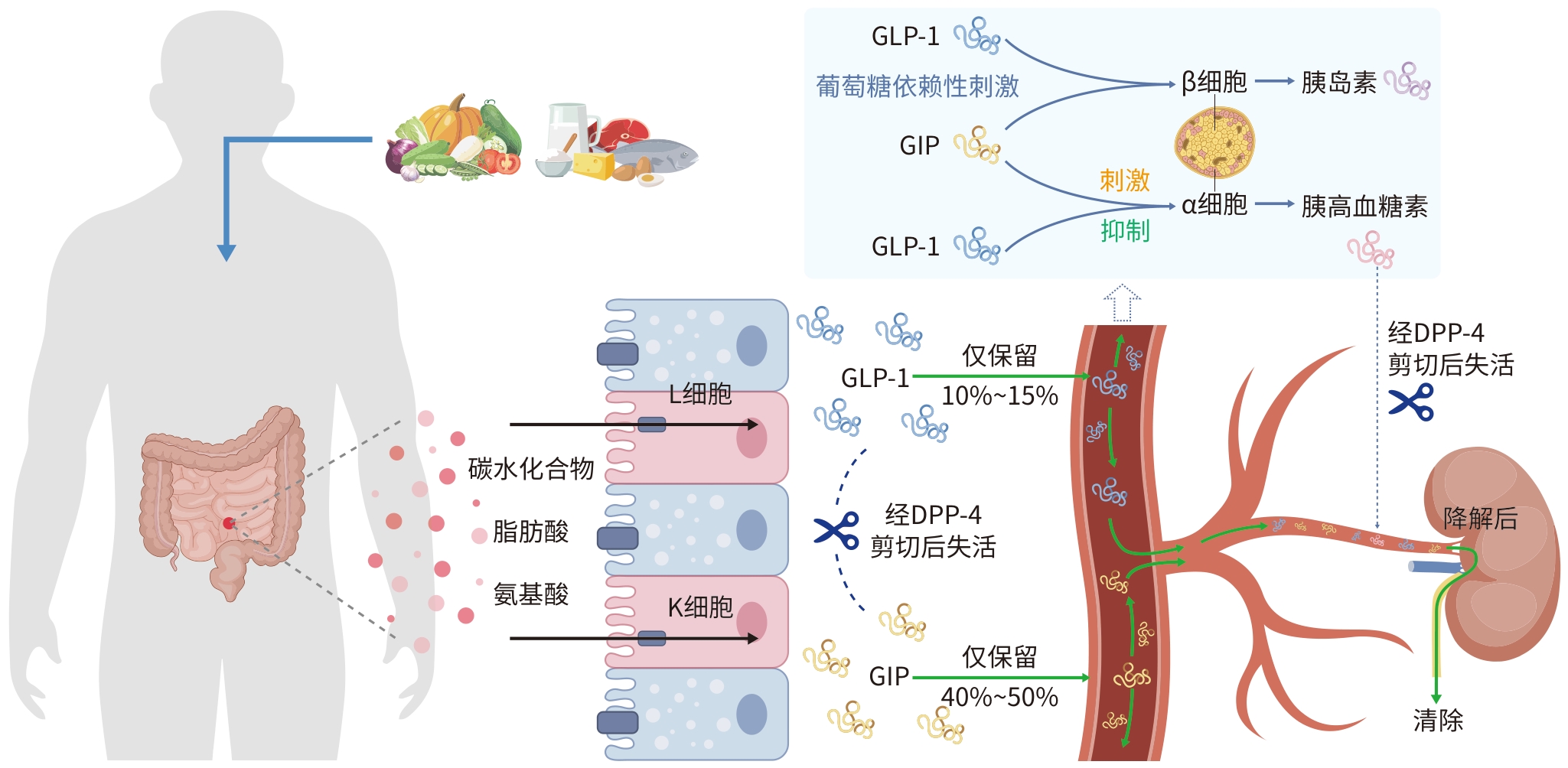
图(1)
计量
- 文章访问数: 17
- HTML全文浏览量: 5
- PDF下载量: 1
- 被引次数: 0