PDF下载 ( 1057 KB)

血清铁、血清肌酐/胱抑素C比值联合终末期肝病模型评分对酒精相关慢加急性肝衰竭患者12周预后的预测价值
DOI: 10.12449/JCH261024
Value of serum iron and serum creatinine/cystatin C ratio combined with model for end-stage liver disease score in predicting the 12-week prognosis of alcohol-related acute-on-chronic liver failure
-
摘要:
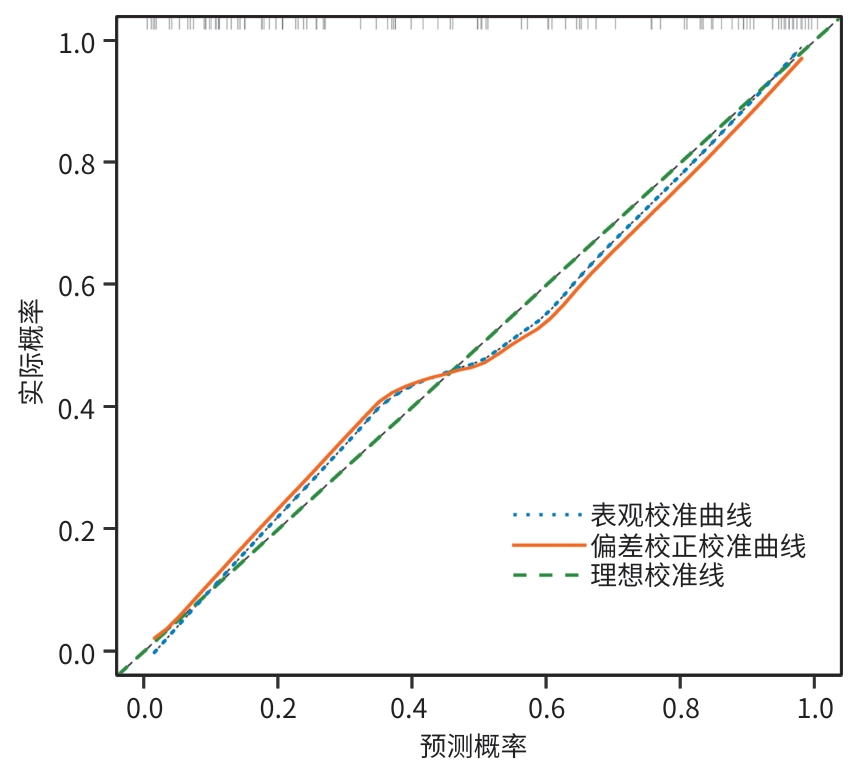
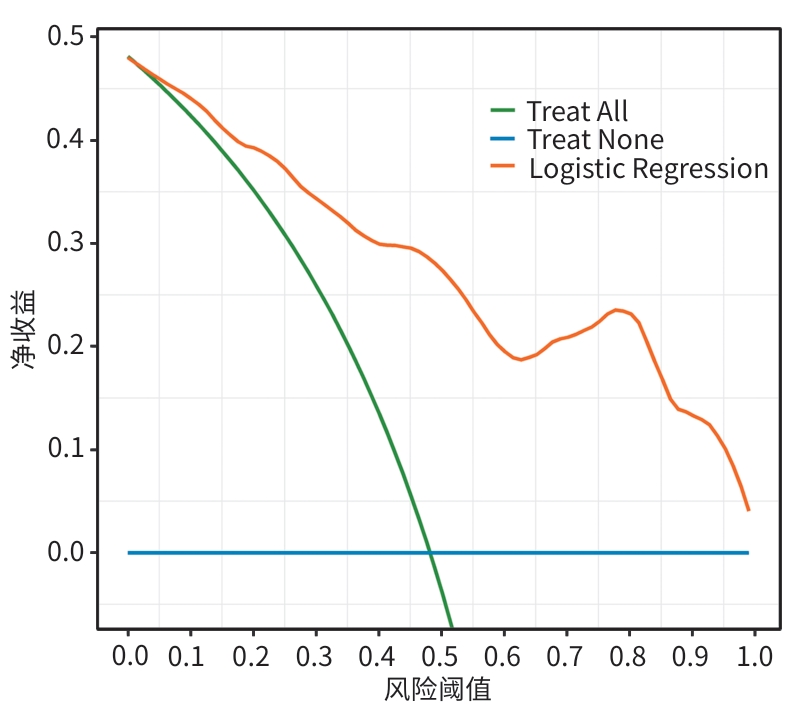
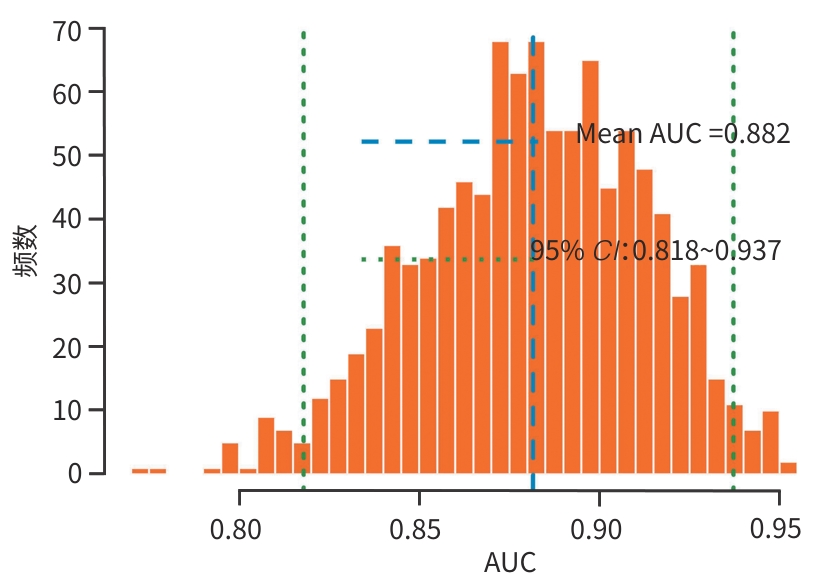
目的 分析血清铁、血清肌酐/胱抑素C比值(CCR)与酒精相关慢加急性肝衰竭(ACLF)12周预后的相关性,并进一步建立模型以提高对酒精相关ACLF预后的预测准确性。 方法 纳入2020年5月—2024年5月贵州省人民医院肝病感染科收治的临床资料完整的酒精相关ACLF患者108例,随访12周,根据患者预后情况分为生存组与死亡组。收集患者临床资料,分析酒精相关ACLF患者12周预后的独立影响因素,构建预后模型并评估模型的预测效能。服从正态分布的计量资料2组间比较采用成组t检验;非正态分布的计量资料2组间比较采用Mann-Whitney U检验;计数资料2组间比较采用χ2检验或Mann-Whitney U检验。采用Logistic回归分析与酒精相关ACLF患者12周预后相关的危险因素,据此建立预测模型。利用R语言,拟合该模型并绘制列线图对模型进行可视化呈现。通过受试者操作特征曲线(ROC曲线)评估模型的区分能力,并计算曲线下面积(AUC)。采用校准曲线、Hosmer-Lemeshow拟合优度检验评价模型的校准能力。应用决策曲线分析(DCA)评价模型临床适用性。采用内部验证法(Bootstrap法)验证模型的内部稳定性和泛化性能。 结果 酒精相关ACLF患者108例,随访12周生存52例、死亡56例。死亡组患者年龄、国际标准化比值、总胆红素、血清铁、CCR、终末期肝病模型(MELD)评分、整合终末期肝病模型(iMELD)评分、终末期肝病模型联合血清钠(MELD-Na)评分均高于生存组;白蛋白、凝血酶原活动度均低于生存组,差异均有统计学意义(P值均<0.05)。多因素Logistic回归分析结果显示,血清铁[比值比(OR)=1.103,P=0.001]、CCR(OR=1.049,P=0.029)、MELD评分(OR=1.272,P<0.001)为酒精相关ACLF患者12周预后的独立影响因素,根据此结果建立联合预测模型,并构建列线图。ROC曲线分析显示该模型的AUC为0.881,特异度为0.839,灵敏度为0.769,其AUC值高于MELD评分、iMELD评分及MELD-Na评分。校准曲线接近参考对角线,即联合模型预测值与实际值一致性良好。DCA曲线显示,在阈值5%~95%范围内联合模型净获益优于全干预和全不干预策略,提示该模型临床实用性较好。内部验证结果示平均AUC值为0.882,与联合模型ROC曲线中AUC基本吻合,则该模型具有良好的内部稳定性和泛化性能。 结论 与MELD评分及其改良系列评分模型相比,血清铁、CCR联合MELD评分构建的新联合模型对酒精相关ACLF患者12周预后的预测效能最佳。 Abstract:Objective To investigate the correlation of serum iron and serum creatinine/cystatin C ratio (CCR) with the 12-week prognosis of alcohol-related acute-on-chronic liver failure (ACLF), to construct a predictive model, and to improve the predictive accuracy for the prognosis of alcohol-related ACLF. Methods A total of 108 patients with alcohol-related ACLF and complete clinical data who were admitted to Department of Hepatology and Infectious Diseases, Guizhou Provincial People’s Hospital, from May 2020 to May 2024 were enrolled in this study. The patients were followed up for 12 weeks and were divided into survival group and death group according to their prognosis. Clinical data were collected from all patients to investigate the independent influencing factors for the 12-week prognosis of patients with alcohol-related ACLF. The independent-samples t test was used for comparison of normally distributed continuous data between two groups, and the Mann-Whitney U test was used for comparison of non-normally distributed continuous data between two groups; the chi-square test was used for comparison of categorical data between two groups. The logistic regression analysis was used to identify the risk factors for the 12-week prognosis of patients with alcohol-related ACLF, and a predictive model was constructed based on these factors. R language was used for model fitting, and a nomogram was plotted for visualization. The receiver operating characteristic (ROC) curve was used to assess the discriminatory ability of the model, and the area under the ROC curve (AUC) was calculated. The calibration curve and the Hosmer-Lemeshow goodness-of-fit test were used to assess the calibration of the model, and decision curve analysis (DCA) was used to assess the clinical applicability of the model. The internal validation method (the Bootstrap method) was used to assess the internal stability and generalization ability of the model. Results Among the 108 patients with alcohol-related ACLF, 52 patients survived and 56 patients died after follow-up for 12 weeks. Compared with the survival group, the death group had significantly higher age, international normalized ratio, total bilirubin, serum iron, CCR, Model for End-Stage Liver Disease (MELD) score, integrated MELD (iMELD) score, MELD combined with serum sodium concentration (MELD-Na) score and significantly lower albumin and prothrombin activity (all P<0.05). The multivariate logistic regression analysis showed that serum iron (odds ratio [OR]=1.103, P=0.001), CCR(OR=1.049, P=0.029), and MELD score (OR=1.272, P<0.001) were independent influencing factors for the 12-week prognosis of patients with alcohol-related ACLF, and a combined predictive model and a nomogram were constructed based on these factors. The ROC curve analysis showed that the model had an AUC of 0.881, a specificity of 0.839, and a sensitivity of 0.769, with a higher AUC than MELD score, iMELD score, and MELD-Na score. The calibration curve aligned closely with the reference diagonal, reflecting good consistency between the predicted and observed values. The DCA curve showed that the combined model achieved greater net benefit than the treat-all and treat-none strategies within the threshold range of 5% — 95%, suggesting that the model had good clinical practicability. Internal validation showed a mean AUC of 0.882, which was basically consistent with the AUC of the model in the ROC curve, suggesting that the model had good internal stability and generalization ability. Conclusion Compared with MELD score and its modified scoring systems, the model combining serum iron, CCR, and MELD score shows the best performance in predicting the 12-week prognosis of patients with alcohol-related ACLF. -
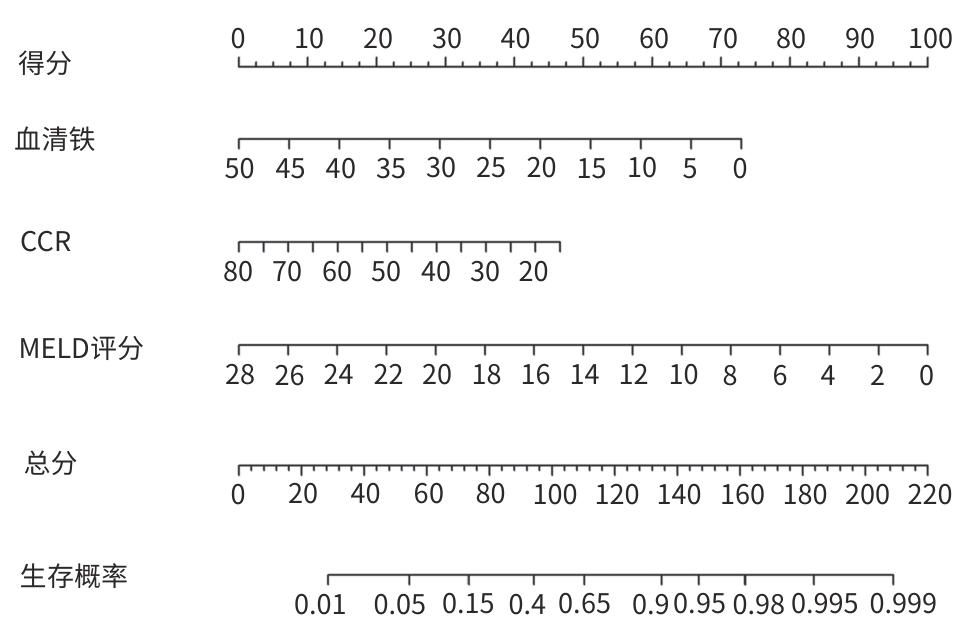
注: CCR,血清肌酐/胱抑素C;MELD,终末期肝病模型。
图 1 多因素分析联合模型列线图
Figure 1. Nomogram of multivariate analysis in the joint model
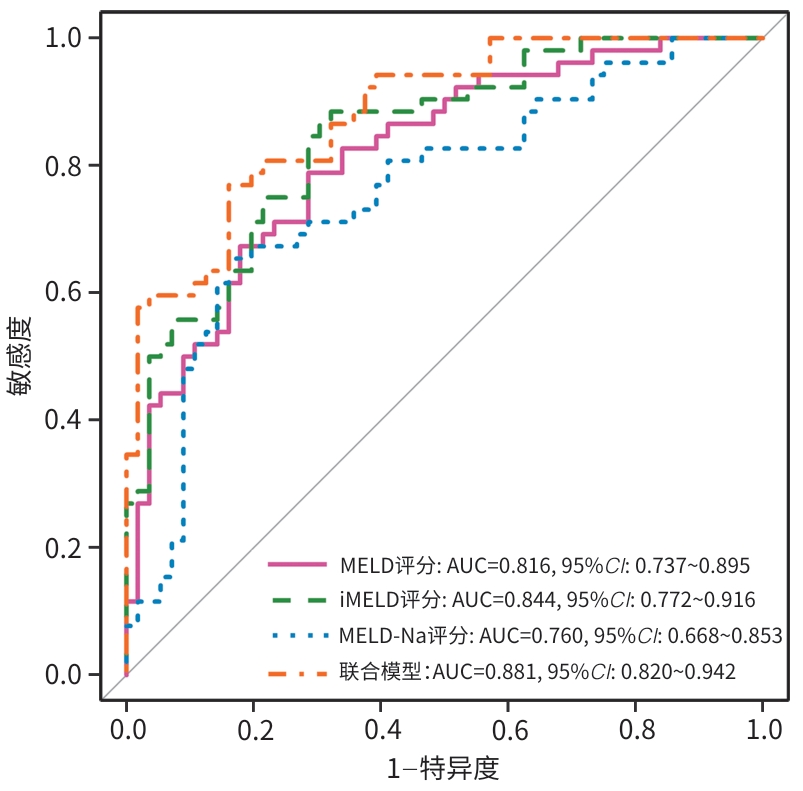
注: MELD,终末期肝病模型;iMELD,整合终末期肝病模型;MELD-Na,终末期肝病模型联合血清钠;ROC曲线,受试者操作特征曲线;AUC,曲线下面积;CI,置信区间。
图 4 四种模型ROC曲线
Figure 4. ROC of the four models
表 1 两组酒精相关ACLF患者一般临床资料比较
Table 1. Comparison of general clinical data between two groups of alcohol-related ACLF patients
变量 死亡组(n=56) 生存组(n=52) 统计值 P值 性别[例 (%)] χ2=1.055 0.304 男 43(76.79) 44(84.62) 女 13(23.21) 8(15.38) 年龄(岁) 47.41±11.64 40.60±11.53 t=3.054 0.003 白细胞计数(×109 /L) 6.34(4.89,11.52) 6.29(4.87,7.47) Z=0.928 0.353 血红蛋白(g/L) 112.00(96.00,127.75) 122.00(98.75,139.25) Z=-1.743 0.081 血小板计数(×109 /L) 100.80±64.62 122.65±61.89 t=-1.792 0.076 中性粒细胞计数(×109 /L) 4.08(3.33,7.65) 4.13(3.05,5.57) Z=1.221 0.222 淋巴细胞计数(×109 /L) 0.94 (0.64,1.40) 1.19(0.85,1.60) Z=-1.709 0.087 凝血酶原时间(s) 19.09±4.00 20.11±3.30 t=-1.444 0.152 凝血酶原活动度(%) 40.66±7.31 46.68±6.27 t=-4.583 <0.001 国际标准化比值 1.85±0.33 1.64±0.23 t=3.784 <0.001 血纤维蛋白原(g/L) 1.55±0.30 1.45±0.32 t=1.712 0.090 丙氨酸氨基转移酶(U/L) 541.93±266.98 469.54±246.00 t=1.462 0.147 天冬氨酸氨基转移酶(U/L) 333.00±172.56 300.96±189.03 t=0.921 0.359 碱性磷酸酶(U/L) 135.50(106.00,170.75) 136.00(114.50,164.25) Z=0.089 0.929 γ-谷氨酰转移酶(U/L) 85.50(51.00,200.50) 84.00(56.00,159.00) Z=0.000 >0.05 乳酸脱氢酶(U/L) 248.00(205.00,341.75) 209.00(184.11,299.00) Z=1.510 0.131 总胆红素(mmol/L) 228.20(136.77,300.00) 165.15(106.65,250.52) Z=2.297 0.022 白蛋白(g/L) 26.65(24.48,28.92) 30.25(27.57,33.80) Z=-3.886 <0.001 尿素(mmol/L) 5.17(3.56,7.35) 3.72(2.93,6.01) Z=1.931 0.054 肾小球滤过率(mL·min-1·1.73m-2) 95.91±17.49 94.33±22.79 t=0.407 0.685 C-反应蛋白(mg/L) 13.52(7.82,25.25) 13.88(7.29,23.75) Z=0.243 0.808 白细胞介素 6(pg/mL) 32.60(20.95,47.67) 38.30(21.75,45.33) Z=0.058 0.953 血清铁(μmol/L) 29.80±9.12 21.29±10.34 t=4.548 <0.001 CCR 44.21(37.39,52.27) 34.82(23.00,44.11) Z=4.070 <0.001 MELD评分(分) 19.04±4.77 12.49±5.50 t=6.630 <0.001 iMELD评分(分) 40.40±6.07 30.96±7.32 t=7.318 <0.001 MELD-Na评分(分) 22.76±8.50 14.29±8.54 t=5.163 <0.001 注:ACLF,慢加急性肝衰竭;CCR,血清肌酐/胱抑素C;MELD,终末期肝病模型;iMELD,整合终末期肝病模型;MELD-Na,终末期肝病模型联合血清钠。
 下载: 导出CSV
表 2 酒精相关ACLF患者12周预后危险因素的多因素Logistic回归分析
Table 2. Multivariate Logistic regression analysis of prognostic risk factors in alcohol-related ACLF patients at 12 weeks
变量 β值 SE Waldχ2 P值 OR 95%CI 血清铁 0.098 0.028 12.023 0.001 1.103 1.044~1.166 CCR 0.048 0.022 4.783 0.029 1.049 1.005~1.096 MELD评分 0.240 0.057 17.683 <0.001 1.272 1.137~1.422 常量 -8.304 1.672 24.663 <0.001 注:ACLF,慢加急性肝衰竭;CCR,血清肌酐/胱抑素C;MELD,终末期肝病模型;OR,比值比;CI,置信区间。
下载: 导出CSV
表 3 四种模型对酒精相关ACLF患者12周预后预测效能
Table 3. Predictive efficacy of four models for 12-week prognosis in alcohol-related ACLF patients
模型 AUC(95%CI) 特异度 灵敏度 阳性预
测值阴性预
测值MELD 0.816(0.737~
0.895)0.714 0.789 0.719 0.784 iMELD 0.844(0.773~
0.916)0.679 0.885 0.719 0.864 MELD-Na 0.760(0.668~
0.853)0.839 0.654 0.791 0.723 联合模型 0.881(0.820~
0.942 )0.839 0.769 0.816 0.797 注:MELD,终末期肝病模型;iMELD,整合终末期肝病模型;MELD-Na,终末期肝病模型联合血清钠;AUC,曲线下面积;CI,置信区间。
下载: 导出CSV
-
[1] Liver Failure and Artificial Liver Group, Chinese Society of Infectious Diseases, Chinese Medical Association; Severe Liver Disease and Artificial Liver Group, Chinese Society of Hepatology, Chinese Medical Association. Guideline for diagnosis and treatment of liver failure(2018)[J]. J Clin Hepatol, 2019, 35( 1): 38- 44. DOI: 10.3969/j.issn.1001-5256.2019.01.007.中华医学会感染病学分会肝衰竭与人工肝学组, 中华医学会肝病学分会重型肝病与人工肝学组. 肝衰竭诊治指南(2018年版)[J]. 临床肝胆病杂志, 2019, 35( 1): 38- 44. DOI: 10.3969/j.issn.1001-5256.2019.01.007. [2] Zhang Q, Hu J X, Qiu S T, et al. Clinical differences between HBV and alcohol related ACLF in a WGO classification multicenter study[J]. Sci Rep, 2025, 15( 1): 25292. DOI: 10.1038/s41598-025-09620-9. [3] Man S, Deng Y H, Ma Y, et al. Prevalence of liver steatosis and fibrosis in the general population and various high-risk populations: A nationwide study with 5.7 million adults in China[J]. Gastroenterology, 2023, 165( 4): 1025- 1040. DOI: 10.1053/j.gastro.2023.05.053. [4] Liu L, Yu X, Zhou R Q, et al. Epidemiological characteristics of acute-on-chronic liver failure in patients with compensated liver disease: A systematic review and meta-analysis[J]. Portal Hypertens Cirrhosis, 2025, 4( 3): 178- 188. DOI: 10.1002/poh2.70018. [5] Moore O, Ma W S, Read S, et al. The unwell patient with advanced chronic liver disease: When to use each score?[J]. BMC Med, 2025, 23( 1): 413. DOI: 10.1186/s12916-025-04185-w. [6] Liu Yingying, Wang Xiaofan, Cong Min. Research progress of liver iron deposition in patients with alcoholic liver disease[J]. Chin Hepatol, 2020, 25( 12): 1348- 1351.刘莹莹, 王晓凡, 丛敏. 酒精性肝病患者肝脏铁沉积研究进展[J]. 肝脏, 2020, 25( 12): 1348- 1351. [7] Wang Lijie, Yang Yanrong, Chen Yu, et al. Evaluation and management of nutritional consequences in patients with alcoholic cirrhosis[J]. J Clin Hepatol, 2025, 41( 4): 761- 767. DOI: 10.12449/JCH250424.王立杰, 杨颜榕, 陈煜, 等. 酒精性肝硬化患者的营养评估与管理[J]. 临床肝胆病杂志, 2025, 41( 4): 761- 767. DOI: 10.12449/JCH250424. [8] Fatty Liver Expert Committee, Chinese Medical Doctor Association, National Workshop on Fatty Liver and Alcoholic Liver Disease, Chinese Society of Hepatology, Chinese Medical Association. Guidelines of prevention and treatment for alcoholic liver disease: a 2018 update[J]. J Clin Hepatol, 2018, 34( 5): 939- 946. DOI: 10.3969/j.issn.1001-5256.2018.05.006.中华医学会肝病学分会脂肪肝和酒精性肝病学组, 中国医师协会脂肪性肝病专家委员会. 酒精性肝病防治指南(2018年更新版)[J]. 临床肝胆病杂志, 2018, 34( 5): 939- 946. DOI: 10.3969/j.issn.1001-5256.2018.05.006. [9] Kezer C A, Simonetto D A, Shah V H. Acute on chronic liver failure in patients with alcohol-associated hepatitis A review[J]. Clin Liver Dis, 2023, 27( 3): 659- 670. DOI: 10.1016/j.cld.2023.03.009. [10] Shalimar, Kedia S, Mahapatra S J, et al. Severity and outcome of acute-on-chronic liver failure is dependent on the etiology of acute hepatic insults: Analysis of 368 patients[J]. J Clin Gastroenterol, 2017, 51( 8): 734- 741. DOI: 10.1097/MCG.0000000000000823. [11] Patidar K R, Peng J L, Kaur H, et al. Severe alcohol-associated hepatitis is associated with worse survival in critically ill patients with acute on chronic liver failure[J]. Hepatol Commun, 2022, 6( 5): 1090- 1099. DOI: 10.1002/hep4.1874. [12] Len V, Wim L, Frederik N. Prednisolone or pentoxifylline for alcoholic hepatitis[J]. N Engl J Med, 2015, 373( 3): 281- 283. DOI: 10.1056/nejmc1506342. [13] Jugnundan S, Silverstein W K, Tsien C. Alcohol-associated hepatitis[J]. CMAJ, 2023, 195( 16): E588. DOI: 10.1503/cmaj.221357. [14] Munoli A S, Mantur P G, Jalawadi V M. Child-pugh score and vitamin D: Exploring a new frontier in liver cirrhosis assessment[J]. Cureus, 2024, 16( 11): e74738. DOI: 10.7759/cureus.74738. [15] Krishnan A, Woreta T A, Vaidya D, et al. MELD or MELD-Na as a predictive model for mortality following transjugular intrahepatic portosystemic shunt placement[J]. J Clin Transl Hepatol, 2023, 11( 1): 38- 44. DOI: 10.14218/JCTH.2021.00513. [16] Razack G S A, Kavya T, Manjunath B D, et al. Utility of sequential organ failure assessment score in predicting outcome for patients with peritoneal sepsis[J]. Int Surg J, 2019, 6( 3): 696. DOI: 10.18203/2349-2902.isj20190817. [17] Luo J J, Liang X, Xin J J, et al. Predicting the onset of hepatitis B virus-related acute-on-chronic liver failure[J]. Clin Gastroenterol Hepatol, 2023, 21( 3): 681- 693. DOI: 10.1016/j.cgh.2022.03.016. [18] Miao Jing, Guo Liying, Wang Li, et al. Study on the application value of MELD-Na, CLIF-C OFs, COSSH-ACLFs and NLR scoring systems in patients with hepatitis B virus related acute-on-chronic liver failure[J]. Chin Critical Care Med, 2020, 32( 12): 1496- 1501. DOI: 10.3760/cma.j.cn121430-20200720-00536.苗静, 郭丽颖, 王丽, 等. MELD-Na、CLIF-C OFs、COSSH-ACLFs、NLR评分体系在乙型肝炎病毒相关慢加急性肝衰竭患者中的应用价值研究[J]. 中华危重病急救医学, 2020, 32( 12): 1496- 1501. DOI: 10.3760/cma.j.cn121430-20200720-00536. [19] Lai Man, Xu Manman, Wang Xin, et al. Prognostic evaluation of liver transplantation for acute-on-chronic liver failure[J]. Ogran Transplant, 2025, 16( 3): 482- 488. DOI: 10.12464/j.issn.1674-7445.2025002.赖曼, 徐曼曼, 王鑫, 等. 慢加急性肝衰竭肝移植预后评估[J]. 器官移植, 2025, 16( 3): 482- 488. DOI: 10.12464/j.issn.1674-7445.2025002. [20] Siddharda B V, Gupta M, Singh R, et al. Predictive ability of different scoring models in severe alcoholic hepatitis[J]. Med J Dr D Y Patil Vidyapeeth, 2024, 17( 2): 342- 348. DOI: 10.4103/mjdrdypu.mjdrdypu_772_22. [21] Wang M Y, Wen X, Feng Z A, et al. ACSS2 protects against alcohol-induced hepatocyte ferroptosis through regulation of hepcidin expression[J]. Nat Commun, 2025, 16: 5491. DOI: 10.1038/s41467-025-61067-8. [22] Chen Y, Gao W K, Cai K L, et al. Ferroptosis and gut microbiota: A new horizon in alcohol-associated liver disease management[J]. Cell Mol Life Sci, 2025, 82( 1): 282. DOI: 10.1007/s00018-025-05815-5. [23] Shu Y J, Wu X F, Zhang D X, et al. Exploring the mechanisms of iron overload-induced liver injury in rats based on transcriptomics and proteomics[J]. Biology, 2025, 14( 1): 81. DOI: 10.3390/biology14010081. [24] Schierwagen R, Gu W Y, Brieger A, et al. Pathogenetic mechanisms and therapeutic approaches of acute-to-chronic liver failure[J]. Am J Physiol Cell Physiol, 2023, 325( 1): C129- C140. DOI: 10.1152/ajpcell.00101.2023. [25] Wu J, Xue R, Wu M C, et al. Nrf2-mediated ferroptosis inhibition exerts a protective effect on acute-on-chronic liver failure[J]. Oxid Med Cell Longev, 2022, 2022: 4505513. DOI: 10.1155/2022/4505513. [26] Co H K C, Wu C C, Lee Y C, et al. Emergence of large-scale cell death through ferroptotic trigger waves[J]. Nature, 2024, 631( 8021): 654- 662. DOI: 10.1038/s41586-024-07623-6. [27] Rodríguez-Graciani K M, Molina P E, Simon L. Alcohol-mediated skeletal muscle adaptations and their impact on comorbidities[J]. Am J Pathol, 2026, 196( 1): 92- 103. DOI: 10.1016/j.ajpath.2025.05.025. [28] Dasarathy J, McCullough A J, Dasarathy S. Sarcopenia in alcoholic liver disease: Clinical and molecular advances[J]. Alcohol Clin Exp Res, 2017, 41( 8): 1419- 1431. DOI: 10.1111/acer.13425. [29] Hassan M, Saab O, Ahmed Z, et al. S1908 Prevalence and outcomes of sarcopenia among patients with alcoholic liver disease: A nationwide cohort study[J]. Am J Gastroenterol, 2024, 119( 10S): S1367- S1368. DOI: 10.14309/01.ajg.0001037000.95491.ef. [30] Kirk B, Kuo C L, Liu P R, et al. Diagnostic power of serum creatinine/cystatin C ratio for identifying low MRI-muscle volume and low grip strength: Data from 9 731 to 149 707 UK biobank older adults[J]. J Gerontol A Biol Sci Med Sci, 2024, 80( 1): glae274. DOI: 10.1093/gerona/glae274. [31] Liu C, Levey A S, Ballew S H. Serum creatinine and serum cystatin C as an index of muscle mass in adults[J]. Curr Opin Nephrol Hypertens, 2024, 33( 6): 557- 565. DOI: 10.1097/MNH.0000000000001022. [32] Chen J T, Yan L Y, Hu L L, et al. Association between the serum creatinine to cystatin C ratio and cardiovascular disease in middle-aged and older adults in China: A nationwide cohort study[J]. J Am Heart Assoc, 2025, 14( 9): e040050. DOI: 10.1161/JAHA.124.040050. [33] Shin J Y. Low serum creatinine to cystatin C ratio is independently associated with sarcopenia and high carotid plaque score in patients with type 2 diabetes[J]. Nutr Metab Cardiovasc Dis, 2022, 32( 6): 1454- 1462. DOI: 10.1016/j.numecd.2022.02.005. [34] Sun J, Yang H, Cai W T, et al. Serum creatinine/cystatin C ratio as a surrogate marker for sarcopenia in patients with gastric cancer[J]. BMC Gastroenterol, 2022, 22( 1): 26. DOI: 10.1186/s12876-022-02093-4. [35] Wang K, Jia S L, Zhao W Y, et al. The creatinine-to-cystatin C ratio(a surrogate marker of muscle mass) as a predictor of lung function decline in older adults: A nationwide longitudinal study in China[J]. Respir Med, 2023, 211: 107197. DOI: 10.1016/j.rmed.2023.107197. [36] Tabara Y, Kohara K, Okada Y, et al. Creatinine-to-cystatin C ratio as a marker of skeletal muscle mass in older adults: J-SHIPP study[J]. Clin Nutr, 2020, 39( 6): 1857- 1862. DOI: 10.1016/j.clnu.2019.07.027. [37] Musio A, Perazza F, Leoni L, et al. Osteosarcopenia in NAFLD/MAFLD: An underappreciated clinical problem in chronic liver disease[J]. Int J Mol Sci, 2023, 24( 8): 7517. DOI: 10.3390/ijms24087517. [38] Mazumder N R, Fontana R J. MELD 3.0 in advanced chronic liver disease[J]. Annu Rev Med, 2024, 75: 233- 245. DOI: 10.1146/annurev-med-051322-122539. -

 本文二维码
计量
- 文章访问数: 14
- HTML全文浏览量: 6
- PDF下载量: 1
- 被引次数: 0