PDF下载 ( 2213 KB)

C反应蛋白对急性失代偿期肝硬化进展为慢加急性肝衰竭的预测价值
DOI: 10.12449/JCH260719
Value of C-reactive protein in predicting the progression of acute decompensation of cirrhosis to acute-on-chronic liver failure
-
摘要:
目的 探讨C反应蛋白(CRP)水平对肝硬化急性失代偿(AD)患者发病90 d内进展为慢加急性肝衰竭(ACLF)的预测效能,为临床早期识别高危人群提供参考。 方法 回顾性纳入2015年1月—2024年10月于南京市第二医院因AD住院的906例肝硬化患者为研究对象。收集患者入院时的人口学特征、肝硬化AD并发症类型及实验室指标。主要研究终点为入院后90 d内进展为ACLF,根据结果分为非ACLF组(n=676)和ACLF组(n=230)。符合正态分布的计量资料两组间比较采用成组t检验;非正态分布的计量资料两组间比较采用Wilcoxon秩和检验;计数资料两组间比较采用χ2 检验或Fisher精确概率法。采用单因素及多因素Cox比例风险回归模型筛选ACLF的独立预测因素。通过受试者操作特征曲线(ROC曲线)评估CRP及现有评分系统[终末期肝病模型(MELD)评分、蔡尔德-皮尤改良(CTP)评分和慢性肝衰竭联盟急性失代偿(CLIF-C AD)评分]的预测效能,并使用限制性立方样条分析CRP与ACLF风险的非线性关系。通过约登指数确定CRP的最佳预测截断值,并绘制Kaplan-Meier生存曲线进行风险分层,生存分析采用Log-rank检验。 结果 906例肝硬化AD患者中,90 d内ACLF发生率为25.39%。合并(n=264)与未合并(n=642)细菌感染患者90 d内ACLF发生率分别为45.1%、17.3%(χ2=74.791,P<0.001)。906例患者中,312例(34.44%)为pre-ACLF,其中60.58%(n=189)进展为ACLF,显著高于非pre-ACLF组患者的6.90%(41/594)(χ2=310.234,P<0.001)。230例ACLF患者中,102例(44.35%)为stable型,128例(55.65%)为unstable型;stable型和unstable型ACLF患者的CRP比较差异有统计学意义(U=5 234.500,P<0.001)。限制性立方样条分析显示,CRP与ACLF发生风险呈显著非线性关系(P<0.001)。约登指数确定CRP的最佳截断值为10.16 mg/L(敏感度为70.4%,特异度为64.5%)。Kaplan-Meier曲线分析结果显示,CRP≥10.16 mg/L的高危组患者90 d内ACLF无事件生存率显著低于低危组(P<0.001)。多因素Cox回归分析显示,肝硬化AD并发症肝性脑病[风险比(HR)=4.199,95%置信区间(CI):3.056~5.770,P<0.001]、细菌感染(HR=1.826,95%CI:1.356~2.459,P<0.001),以及CRP(≥10.16 mg/L)(HR=2.356,95%CI:1.825~3.047,P<0.001)、白细胞计数(HR=1.021,95%CI:1.002~1.041,P=0.035)、血红蛋白(HR=0.994,95%CI:0.989~0.999,P=0.025)、国际标准化比值(HR=1.657,95%CI:1.372~2.001,P<0.001)、总胆红素(HR=1.003,95%CI:1.002~1.004,P<0.001)、白蛋白(HR=0.956,95%CI:0.926~0.986,P=0.004)、肌酐(HR=1.005,95%CI:1.004~1.006,P<0.001)、血钠(HR=0.976,95%CI:0.956~0.997,P=0.025)、乳酸脱氢酶(HR=1.001,95%CI:1.001~1.002,P<0.001)均是患者90 d内进展为ACLF的独立预测因子。ROC曲线分析显示,单独CRP预测ACLF的AUC为0.724(95% CI:0.685~0.763),CRP+MELD评分预测效能最优(AUC=0.870,95% CI:0.843~0.898),CRP+CTP评分AUC为0.852(95% CI:0.823~0.881),CRP+CLIF-C AD评分AUC为0.845(95% CI:0.812~0.877),整合后的模型效能均显著提升(P<0.05)。 结论 入院时血清CRP水平是肝硬化AD患者90 d内进展为ACLF的独立预测因子。CRP≥10.16 mg/L可作为高危患者的简易识别阈值。将CRP纳入现有评估体系,有助于提升对ACLF高危患者的早期识别能力,为临床干预提供参考。 Abstract:Objective To investigate the efficacy of C-reactive protein (CRP) in predicting the progression to acute-on-chronic liver failure (ACLF) within 90 days after disease onset in patients with acute decompensation (AD) of cirrhosis, and to provide a reference for the early identification of high-risk populations in clinical practice. Methods A retrospective study was conducted among 906 patients with liver cirrhosis who were hospitalized due to AD in Nanjing Second Hospital from January 1, 2015 to October 31, 2024, and demographic features, AD type, and laboratory markers were collected on admission. The primary endpoint was progression to ACLF within 90 days after admission, and according to the presence or absence of ACLF, the patients were divided into non-ACLF group with 676 patients and ACLF group with 230 patients. The independent-samples t test was used for comparison of normally distributed continuous data between groups, and the Wilcoxon rank-sum test was used for comparison of non-normally distributed continuous data between groups; the chi-square test or the Fisher’s exact test was used for comparison of categorical data between groups. The univariate and multivariate Cox proportional-hazards regression models were used to identify independent predictive factors for ACLF. The receiver operating characteristic (ROC) curve was used to assess the predictive performance of CRP and existing scoring systems (Model for End-Stage Liver Disease [MELD], Child-Turcotte-Pugh [CTP] score, and Chronic Liver Failure Consortium Acute Decompensation [CLIF-C AD] score), and the restricted cubic spline analysis was used to investigate the nonlinear relationship between CRP and the risk of ACLF. Youden index was used to determine the optimal predictive cut-off value for CRP, and the Kaplan-Meier survival curve was plotted for risk stratification, while the log-rank test was used for survival analysis. Results Among the 906 AD patients, the incidence rate of ACLF was 25.39% within 90 days. The incidence rate of ACLF within 90 days was 45.1% in the 264 patients with bacterial infection and 17.3% in the 642 patients without bacterial infection (χ²=74.791, P<0.001). Among the 906 patients, 312 patients (34.44%) had acute-on-chronic pre-liver failure (pre-ACLF), with a significantly higher proportion of patients who progressed to ACLF than those in the non-pre-ACLF group [60.58% (189/312) vs 6.90% (41/594), χ²=310.234, P<0.001]. Among the 230 patients with ACLF, there were 102 patients with stable ACLF (44.35%) and 128 patients with unstable ACLF (55.65%), with a significant difference in CRP between the two groups of patients (U=5 234.500, P<0.001). The restricted cubic spline analysis showed a significant nonlinear relationship between CRP and the risk of ACLF (P<0.001). The optimal cut-off value of CRP was determined as 10.16 mg/L based on the Youden index, with a sensitivity of 70.4% and a specificity of 64.5%. The Kaplan-Meier curve analysis showed that the high-risk group with CRP≥10.16 mg/L had a significantly higher event-free survival rate of ACLF within 90 days compared with the low-risk group (P<0.001). The multivariate Cox regression analysis showed that AD type-hepatic encephalopathy (hazard ratio [HR]=4.199, 95% confidence interval [CI]: 3.056 — 5.770, P<0.001), AD type-bacterial infection (HR=1.826, 95%CI: 1.356 — 2.459, P<0.001), CRP (≥10.16 mg/L) (HR=2.356, 95%CI: 1.825 — 3.047, P<0.001), white blood cell count (HR=1.021, 95%CI: 1.002 — 1.041, P=0.035), hemoglobin (HR=0.994, 95%CI: 0.989 — 0.999, P=0.025), international normalized ratio (HR=1.657, 95%CI: 1.372 — 2.001, P<0.001), total bilirubin (HR=1.003, 95%CI: 1.002 — 1.004, P<0.001), albumin (HR=0.956, 95%CI: 0.926 — 0.986, P=0.004), creatinine (HR=1.005, 95%CI: 1.004 — 1.006, P<0.001), serum sodium (HR=0.976, 95%CI: 0.956 — 0.997, P=0.025), and lactate dehydrogenase (HR=1.001, 95%CI: 1.001 — 1.002, P<0.001) were all independent predictive factors for progression to ACLF within 90 days. The ROC curve analysis showed that CRP alone had an area under the ROC curve (AUC) of 0.724 (95%CI: 0.685 — 0.763) in predicting ACLF, and CRP+MELD score had the best predictive performance (AUC=0.870, 95%CI: 0.843 — 0.898), while CRP+CTP score and CRP+CLIF-C AD score had an AUC of 0.852 (95%CI: 0.823 — 0.881) and 0.845 (95%CI: 0.812 — 0.877), respectively. There was a significant increase in model performance after integration (P<0.05). Conclusion Serum CRP level on admission is an independent predictive factor for progression to ACLF within 90 days in patients with AD of cirrhosis, and a CRP level of ≥10.16 mg/L can be used as a simple threshold for identifying high-risk patients. Incorporating CRP into existing assessment systems may enhance the early identification of patients at a high risk for ACLF, which provides a reference for clinical intervention. -
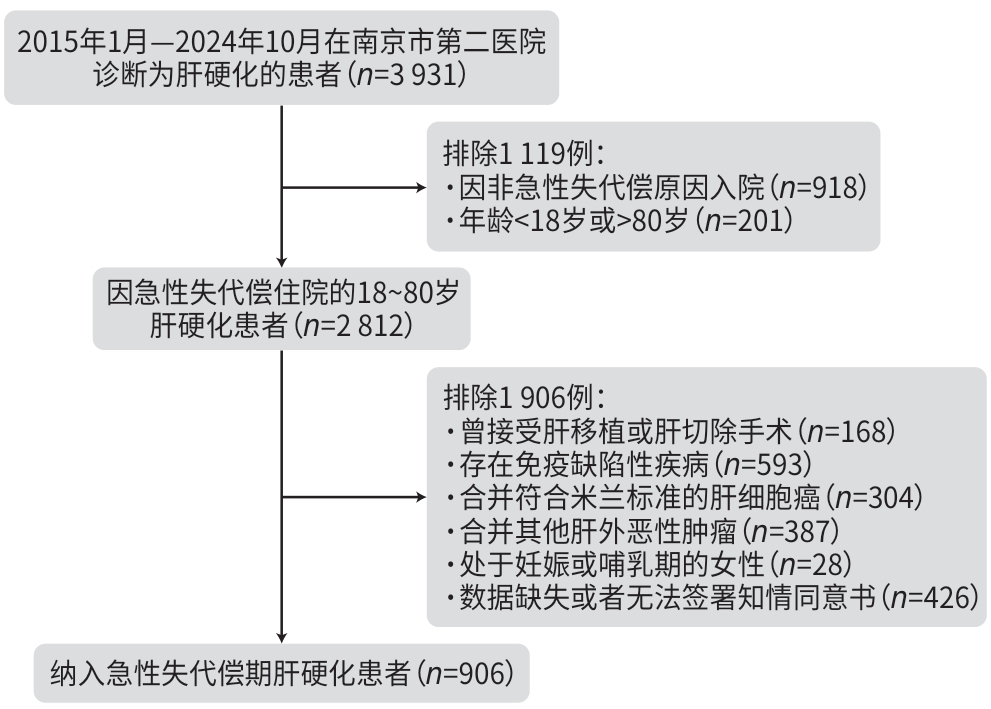
图 1 本研究纳入研究对象筛选流程图
Figure 1. Flowchart of enrollment and screening of study subjects in this study
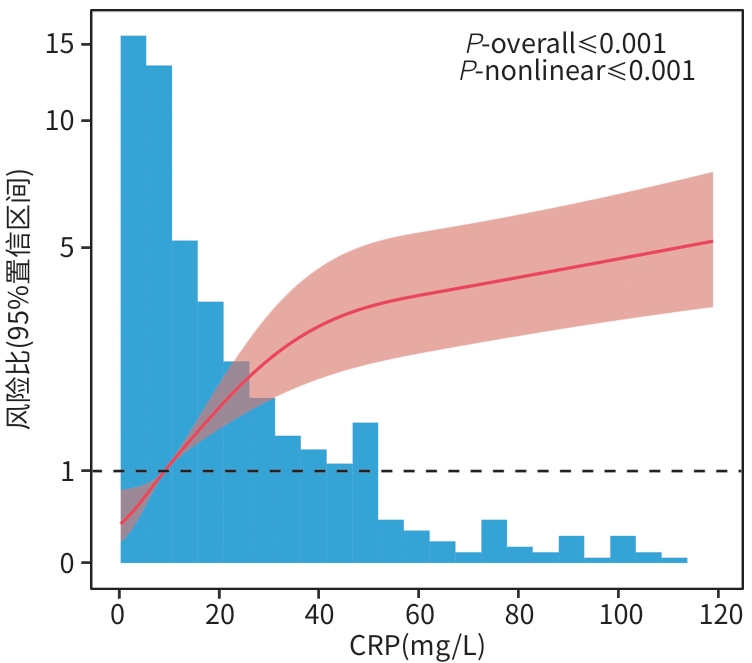
注: CRP,C反应蛋白;ACLF,慢加急性肝衰竭。
图 2 使用限制性立方样条分析CRP与ACLF的关系
Figure 2. Restricted cubic spline plot showing the non-linear association between CRP and ACLF
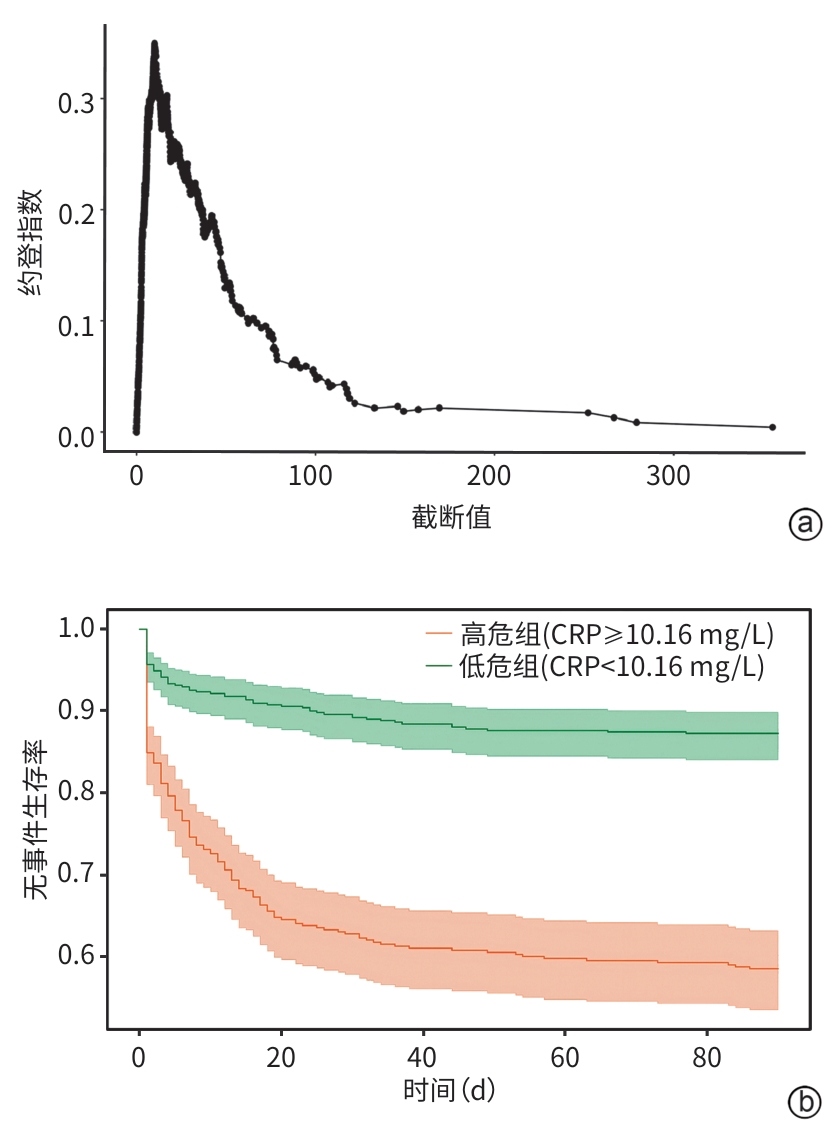
注: a,不同CRP截断值预测90 d ACLF发生的约登指数;b,ACLF无事件生存率的Kaplan-Meier曲线。CRP,C反应蛋白;ACLF,慢加急性肝衰竭。
图 3 CRP阈值的确定和验证
Figure 3. Determination and validation of the CRP threshold
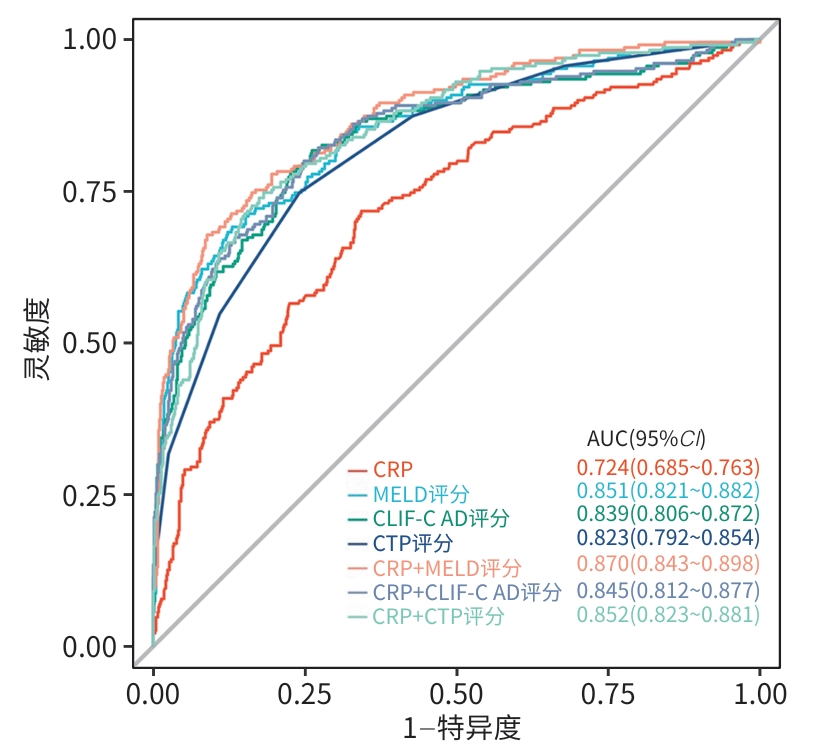
注: CRP,C反应蛋白;MELD评分,终末期肝病模型评分;CLIF-C AD评分,慢性肝衰竭联盟急性失代偿评分;CTP评分,蔡尔德-皮尤改良评分;AUC,曲线下面积;CI,置信区间。
图 4 传统模型和C反应蛋白调整模型的受试者操作特征曲线比较
Figure 4. Comparison of receiver operating characteristic curves between the traditional model and the C-reactive protein adjusted model
表 1 两组患者的基线特征
Table 1. Baseline characteristics of patients in the two groups
项目 非ACLF组(n=676) ACLF组(n=230) 统计值 P值 年龄(岁) 57.00(49.00~65.00) 56.00(47.00~68.00) Z=0.242 0.809 性别[例(%)] χ2=7.019 0.008 男 413(61.09) 163(70.87) 女 263(38.91) 67(29.13) 肝硬化病因[例(%)] χ2=16.979 0.002 病毒 406(60.06) 139(60.43) 酒精 83(12.28) 49(21.30) 自身免疫 92(13.61) 20(8.70) 代谢障碍 20(2.96) 2(0.87) 其他 75(11.09) 20(8.70) 肝硬化AD并发症类型[例(%)] 胸腔积液 30(4.44) 7(3.04) χ2=0.533 0.465 腹水 436(64.50) 123(53.48) χ2=8.357 0.004 肝性脑病 29(4.29) 106(46.09) χ2=112.048 <0.001 食管胃底静脉曲张破裂出血 114(16.86) 20(8.70) χ2=8.449 0.004 细菌感染 145(21.45) 119(51.74) χ2=74.791 <0.001 既往AD[例(%)] χ2=17.110 <0.001 有 208(30.77) 106(46.09) 无 468(69.23) 124(53.91) 既往脾切病史[例(%)] χ2=0.269 0.604 有 78(11.54) 23(10.00) 无 598(88.46) 207(90.00) C反应蛋白(mg/L) 7.24(3.08~15.60) 18.96(8.95~46.81) Z=10.177 <0.001 白细胞(×109/L) 4.04(2.76~5.67) 6.69(4.25~10.08) Z=9.962 <0.001 中性粒细胞百分比(%) 61.55(52.05~71.70) 74.55(63.73~82.50) Z=9.550 <0.001 血红蛋白(g/L) 111.00(92.00~127.00) 97.00(81.25~117.00) Z=5.183 <0.001 血小板(×1012/L) 69.00(46.75~108.00) 68.00(41.25~110.50) Z=0.826 0.409 凝血酶原时间(s) 15.00(13.60~16.70) 20.50(16.23~25.18) Z=14.078 <0.001 国际标准化比值 1.34(1.21~1.48) 1.84(1.44~2.25) Z=13.977 <0.001 总胆红素(μmol/L) 29.50(17.50~57.35) 215.60(63.08~373.20) Z=14.847 <0.001 白蛋白(g/L) 32.30(28.70~35.70) 29.25(26.10~32.18) Z=8.083 <0.001 丙氨酸氨基转移酶(U/L) 29.60(18.60~48.40) 39.75(23.10~84.97) Z=5.309 <0.001 天冬氨酸氨基转移酶(U/L) 40.00(27.38~67.60) 71.60(36.28~124.97) Z=7.709 <0.001 γ-谷氨酰转移酶(U/L) 54.95(26.00~110.98) 62.00(28.50~124.40) Z=0.682 0.495 碱性磷酸酶(U/L) 112.85(83.30~154.53) 126.65(91.10~173.02) Z=2.919 0.004 肌酐(mg/L) 64.00(54.00~75.25) 86.00(59.25~153.75) Z=8.240 <0.001 血尿素氮(mmol/L) 4.87(3.90~6.36) 8.41(4.52~14.79) Z=8.589 <0.001 钠(mmol/L) 140.40(137.90~142.20) 136.05(132.07~139.62) Z=10.683 <0.001 乳酸脱氢酶(U/L) 209.00(170.00~253.00) 241.13(182.25~317.75) Z=5.102 <0.001 乳酸(mmol/L) 2.80(2.40~3.16) 3.02(2.51~3.62) Z=4.052 <0.001 葡萄糖(mmol/L) 5.05(4.53~6.13) 5.08(4.50~6.18) Z=0.059 0.953 尿酸(μmol/L) 280.50(212.00~375.00) 287.00(177.50~411.50) Z=0.473 0.636 MELD评分(分) 9.07(5.76~13.22) 20.29(13.49~24.26) Z=15.940 <0.001 CLIF-C AD评分(分) 42.20(36.90~47.71) 56.19(48.87~63.37) Z=15.375 <0.001 CTP评分(分) 7.00(6.00~8.00) 10.00(8.25~11.00) Z=14.841 <0.001 注:AD,急性失代偿;MELD评分,终末期肝病模型评分;CLIF-C AD,慢性肝衰竭联盟急性失代偿评分;CTP评分,蔡尔德-皮尤改良评分。
 下载: 导出CSV
表 2 单因素和多因素Cox回归分析
Table 2. Univariate and multivariate Cox regression
变量 单因素分析 多因素分析 HR(95%CI) P值 HR(95%CI) P值 腹水 0.660(0.509~0.855) 0.002 肝性脑病 6.135(4.610~8.166) <0.001 4.199(3.056~5.770) <0.001 食管胃底静脉曲张破裂出血 0.517(0.327~0.818) 0.005 细菌感染 3.093(2.387~4.008) <0.001 1.826(1.356~2.459) <0.001 既往肝硬化急性失代偿 1.760(1.358~2.281) <0.001 C反应蛋白(≥10.16 mg/L) 3.250(2.520~4.180) <0.001 2.356(1.825~3.047) <0.001 白细胞计数 1.049(1.039~1.060) <0.001 1.021(1.002~1.041) 0.035 中性粒细胞百分比 1.050(1.039~1.060) <0.001 血红蛋白 0.989(0.984~0.993) <0.001 0.994(0.989~0.999) 0.025 凝血酶原时间 1.117(1.105~1.130) <0.001 国际标准化比值 3.498(3.072~3.984) <0.001 1.657(1.372~2.001) <0.001 总胆红素 1.005(1.004~1.006) <0.001 1.003(1.002~1.004) <0.001 白蛋白 0.894(0.871~0.917) <0.001 0.956(0.926~0.986) 0.004 丙氨酸氨基转移酶 1.001(1.000~1.001) <0.001 天冬氨酸氨基转移酶 1.002(1.001~1.002) <0.001 碱性磷酸酶 1.001(1.000~1.002) 0.010 肌酐 1.005(1.004~1.006) <0.001 1.005(1.004~1.006) <0.001 血尿素氮 1.018(1.014~1.023) <0.001 血钠 0.959(0.950~0.967) <0.001 0.976(0.956~0.997) 0.025 乳酸脱氢酶 1.002(1.001~1.002) <0.001 1.001(1.001~1.002) <0.001 乳酸 1.015(1.004~1.026) 0.006
下载: 导出CSV
-
[1] Tsochatzis E A, Bosch J, Burroughs A K. Liver cirrhosis[J]. Lancet, 2014, 383( 9930): 1749- 1761. DOI: 10.1016/S0140-6736(14)60121-5. [2] Goh X E, Goh M X, Chen V L, et al. Prevalence and clinical outcomes of recompensation in decompensated cirrhosis: A systematic review and meta-analysis[J]. Clin Gastroenterol Hepatol, 2026, 24( 4): 911- 922. DOI: 10.1016/j.cgh.2025.08.010. [3] Wang S P, Guo G Y, Wang H, et al. Improved discrimination and predictive ability of novel prognostic scores for long-term mortality in hospitalized patients with cirrhosis[J]. J Clin Transl Hepatol, 2025, 13( 6): 484- 492. DOI: 10.14218/JCTH.2025.00004. [4] Moreau R, Tonon M, Krag A, et al. EASL clinical practice guidelines on acute-on-chronic liver failure[J]. J Hepatol, 2023, 79( 2): 461- 491. DOI: 10.1016/j.jhep.2023.04.021. [5] D’Amico G, Bernardi M, Angeli P. Towards a new definition of decompensated cirrhosis[J]. J Hepatol, 2022, 76( 1): 202- 207. DOI: 10.1016/j.jhep.2021.06.018. [6] Zanetto A, Pelizzaro F, Campello E, et al. Severity of systemic inflammation is the main predictor of ACLF and bleeding in individuals with acutely decompensated cirrhosis[J]. J Hepatol, 2023, 78( 2): 301- 311. DOI: 10.1016/j.jhep.2022.09.005. [7] Wong F, Reddy K R, Tandon P, et al. The prediction of in-hospital mortality in decompensated cirrhosis with acute-on-chronic liver failure[J]. Liver Transpl, 2022, 28( 4): 560- 570. DOI: 10.1002/lt.26311. [8] Trebicka J, Fernandez J, Papp M, et al. The PREDICT study uncovers three clinical courses of acutely decompensated cirrhosis that have distinct pathophysiology[J]. J Hepatol, 2020, 73( 4): 842- 854. DOI: 10.1016/j.jhep.2020.06.013. [9] Valainathan S R, Xie Q, Arroyo V, et al. Prognosis algorithms for acute decompensation of cirrhosis and ACLF[J]. Liver Int, 2025, 45( 3): e15927. DOI: 10.1111/liv.15927. [10] Kim J W, Kim J H, Choe W H, et al. MELD-GRAIL-Na is a better predictor of mortality than MELD in Korean patients with cirrhosis[J]. Medicina(Kaunas), 2023, 59( 3): 592. DOI: 10.3390/medicina59030592. [11] Piano S, Mahmud N, Caraceni P, et al. Mechanisms and treatment approaches for ACLF[J]. Liver Int, 2025, 45( 3): e15733. DOI: 10.1111/liv.15733. [12] Li J, Liang X, Jiang J, et al. PBMC transcriptomics identifies immune-metabolism disorder during the development of HBV-ACLF[J]. Gut, 2022, 71( 1): 163- 175. DOI: 10.1136/gutjnl-2020-323395. [13] Arroyo V, Angeli P, Moreau R, et al. The systemic inflammation hypothesis: Towards a new paradigm of acute decompensation and multiorgan failure in cirrhosis[J]. J Hepatol, 2021, 74( 3): 670- 685. DOI: 10.1016/j.jhep.2020.11.048. [14] Costa D, Simbrunner B, Jachs M, et al. Systemic inflammation increases across distinct stages of advanced chronic liver disease and correlates with decompensation and mortality[J]. J Hepatol, 2021, 74( 4): 819- 828. DOI: 10.1016/j.jhep.2020.10.004. [15] Jachs M, Hartl L, Schaufler D, et al. Amelioration of systemic inflammation in advanced chronic liver disease upon beta-blocker therapy translates into improved clinical outcomes[J]. Gut, 2021, 70( 9): 1758- 1767. DOI: 10.1136/gutjnl-2020-322712. [16] Solé C, Solà E, Morales-Ruiz M, et al. Characterization of inflammatory response in acute-on-chronic liver failure and relationship with prognosis[J]. Sci Rep, 2016, 6: 32341. DOI: 10.1038/srep32341. [17] Pompili E, Baldassarre M, Bedogni G, et al. Predictors of clinical trajectories of patients with acutely decompensated cirrhosis. An external validation of the PREDICT study[J]. Liver Int, 2024, 44( 1): 72- 82. DOI: 10.1111/liv.15734. [18] Rizo-Téllez S A, Sekheri M, Filep J G. C-reactive protein: A target for therapy to reduce inflammation[J]. Front Immunol, 2023, 14: 1237729. DOI: 10.3389/fimmu.2023.1237729. [19] Zhou H H, Tang Y L, Xu T H, et al. C-reactive protein: Structure, function, regulation, and role in clinical diseases[J]. Front Immunol, 2024, 15: 1425168. DOI: 10.3389/fimmu.2024.1425168. [20] Balcar L, Semmler G, Pomej K, et al. Patterns of acute decompensation in hospitalized patients with cirrhosis and course of acute-on-chronic liver failure[J]. United European Gastroenterol J, 2021, 9( 4): 427- 437. DOI: 10.1002/ueg2.12089. [21] Engelmann C, Clària J, Szabo G, et al. Pathophysiology of decompensated cirrhosis: Portal hypertension, circulatory dysfunction, inflammation, metabolism and mitochondrial dysfunction[J]. J Hepatol, 2021, 75( Suppl 1): S49- S66. DOI: 10.1016/j.jhep.2021.01.002. [22] Taru V, Szabo G, Mehal W, et al. Inflammasomes in chronic liver disease: Hepatic injury, fibrosis progression and systemic inflammation[J]. J Hepatol, 2024, 81( 5): 895- 910. DOI: 10.1016/j.jhep.2024.06.016. [23] Albillos A, Martin-Mateos R, Van der Merwe S, et al. Cirrhosis-associated immune dysfunction[J]. Nat Rev Gastroenterol Hepatol, 2022, 19( 2): 112- 134. DOI: 10.1038/s41575-021-00520-7. [24] Moreau R, Jalan R, Gines P, et al. Acute-on-chronic liver failure is a distinct syndrome that develops in patients with acute decompensation of cirrhosis[J]. Gastroenterology, 2013, 144( 7): 1426- 1437.e9. DOI: 10.1053/j.gastro.2013.02.042. [25] Barosa R, Roque Ramos L, Patita M, et al. CLIF-C ACLF score is a better mortality predictor than MELD, MELD-Na and CTP in patients with Acute on Chronic Liver Failure admitted to the ward[J]. Rev Esp Enferm Dig, 2017, 109: 399- 405. DOI: 10.17235/reed.2017.4701/2016. [26] Hernaez R, Liu Y, Kramer J R, et al. Model for end-stage liver disease-sodium underestimates 90-day mortality risk in patients with acute-on-chronic liver failure[J]. J Hepatol, 2020, 73( 6): 1425- 1433. DOI: 10.1016/j.jhep.2020.06.005. [27] Viveiros A, Finkenstedt A, Schaefer B, et al. Transferrin as a predictor of survival in cirrhosis[J]. Liver Transplant, 2018, 24( 3): 343- 351. DOI: 10.1002/lt.24981. [28] Turco L, Garcia-Tsao G, Magnani I, et al. Cardiopulmonary hemodynamics and C-reactive protein as prognostic indicators in compensated and decompensated cirrhosis[J]. J Hepatol, 2018, 68( 5): 949- 958. DOI: 10.1016/j.jhep.2017.12.027. [29] di Martino V, Coutris C, Cervoni J P, et al. Prognostic value of C-reactive protein levels in patients with cirrhosis[J]. Liver Transpl, 2015, 21( 6): 753- 760. DOI: 10.1002/lt.24088. -

 本文二维码
本文二维码
计量
- 文章访问数: 356
- HTML全文浏览量: 186
- PDF下载量: 46
- 被引次数: 0