PDF下载 ( 776 KB)

肝癌干细胞在肝细胞癌中的作用和靶向治疗策略
DOI: 10.12449/JCH260229
Role of liver cancer stem cells in hepatocellular carcinoma and related strategies for targeted therapy
-
摘要: 肝细胞癌(HCC)是一种全球范围内发病率与死亡率均较高的恶性肿瘤,其治疗抵抗及复发机制与肝癌干细胞(LCSC)密切相关。本文系统介绍了LCSC的生物学特征及其在HCC进展中的关键作用,回顾了上皮细胞黏附分子、CD133等特异性表面标志物及相关信号通路(Wnt/β-连环蛋白、转化生长因子-β、信号转导与转录激活因子3)的功能特性,阐述了LCSC与肿瘤微环境之间的相互作用,并总结了靶向LCSC的最新临床治疗策略及现有耐药机制的对策。文章指出,LCSC通过代谢重编程与免疫微环境重塑促进肿瘤的发生发展;提出应建立LCSC特异性标志物的标准化检测体系,并推动以靶向治疗、免疫调节与传统化疗相结合的三联协同治疗模式,为HCC的临床干预提供新思路。Abstract: Hepatocellular carcinoma (HCC) is a malignant tumor with relatively high incidence and mortality rates worldwide, and its therapeutic resistance and recurrence mechanism are closely associated with liver cancer stem cells (LCSC). This article systematically introduces the biological characteristics of LCSC and their key role in the progression of HCC, reviews the functional characteristics of the specific surface markers (such as EpCAM and CD133) and related signaling pathways (such as Wnt/β-catenin, TGF-β, and STAT3), elaborates on the interaction between LCSC and tumor microenvironment, and summarizes the latest clinical treatment strategies targeting LCSC and the countermeasure for existing resistance mechanisms. The article points out that LCSC promote tumor development and progression through metabolic reprogramming and immune microenvironment remodeling, and it is proposed to establish a standardized detection system for LCSC specific markers and promote a triple synergistic therapeutic paradigm combining targeted therapy, immune regulation, and traditional chemotherapy, in order to provide new ideas for the clinical intervention of HCC.
-
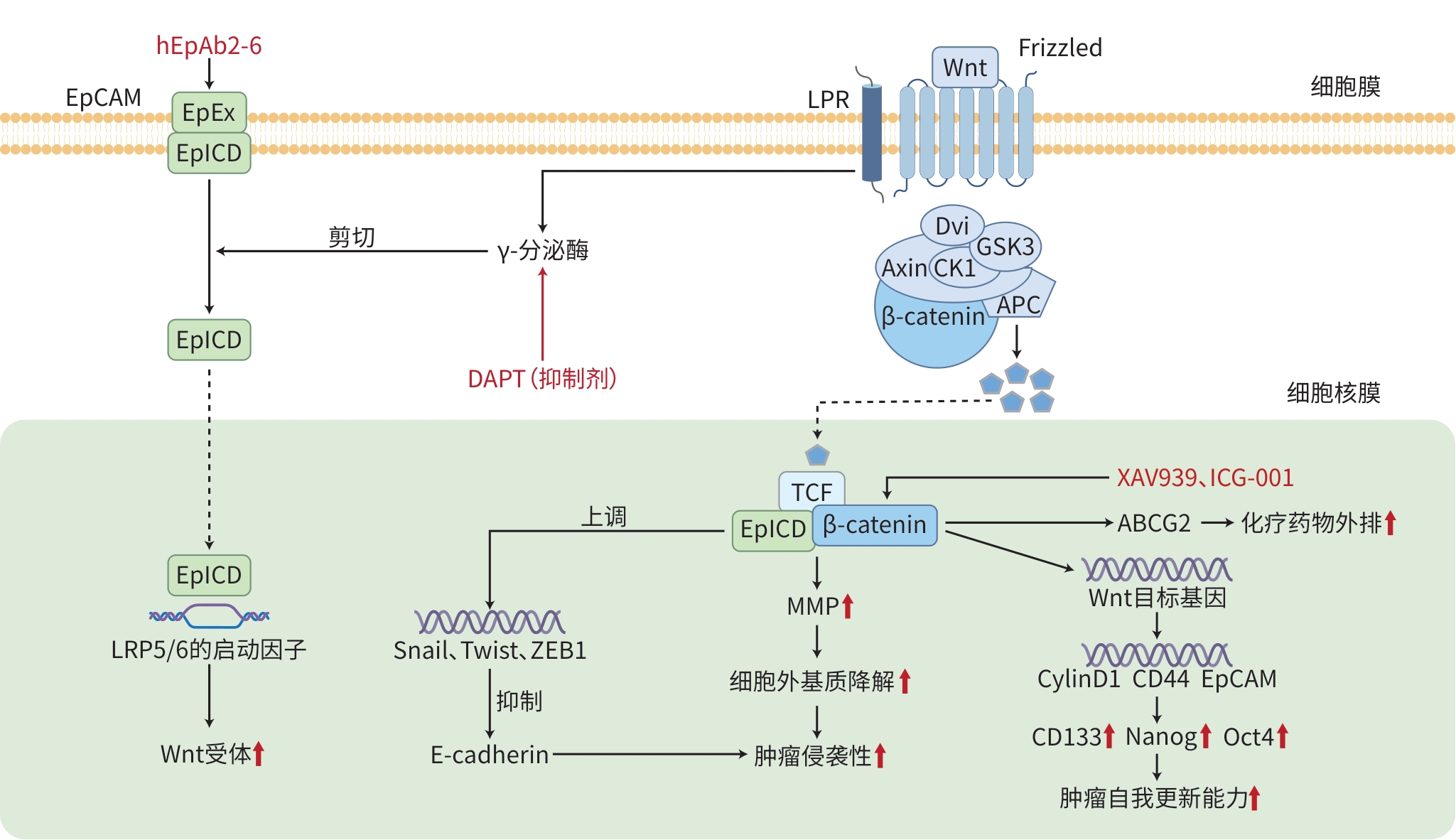
注: hEpAb2-6,人源化抗体2-6;EpCAM,上皮细胞黏附分子;EpEx,上皮细胞黏附分子胞外结构域;EpICD,上皮细胞黏附分子胞内结构域;DAPT,γ-分泌酶抑制剂;Frizzled,卷曲受体;LRP,低密度脂蛋白受体相关蛋白;Dvi,蓬乱蛋白;GSK3,糖原合成酶激酶3;CK1,酪蛋白激酶1;Axin,轴蛋白;APC,腺瘤性结肠息肉病蛋白;β-catenin,β-连环蛋白;TCF,T细胞因子;XAV939、ICG-001,β-catenin抑制剂;LRP5/6,低密度脂蛋白受体相关蛋白5/6;Snail,蜗牛蛋白;Twist,Twist蛋白;ZEB1,锌指E盒结合同源框蛋白1;E-cadherin,上皮型钙黏蛋白;MMP,基质金属蛋白酶;Cyclin D1,细胞周期蛋白D1;CD44,白细胞分化抗原44;CD133,白细胞分化抗原133;Nanog、Oct4,干细胞相关转录因子;ABCG2,腺苷三磷酸结合盒转运蛋白G2。
图 1 LCSC表面的EpCAM通过Wnt/β-catenin信号通路发挥作用机制图
Figure 1. Mechanism diagram of EpCAM on LCSC surface acting through Wnt/β-catenin signal pathway
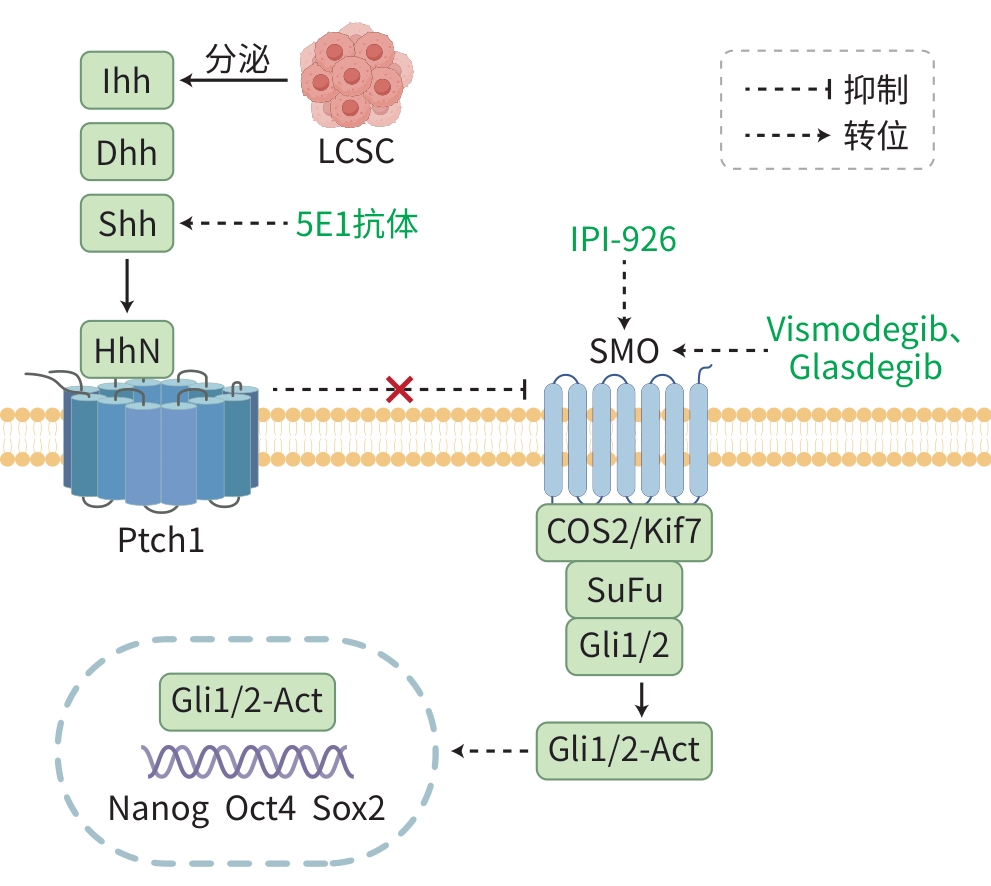
注: LCSC,肝癌干细胞;Ihh,印度刺猬蛋白;Dhh,沙漠刺猬蛋白;Shh,sonic刺猬蛋白;HhN,刺猬蛋白N端结构域;PTCH1,patched同源蛋白1;IPI-926,Hedgehog通路抑制剂;SMO,smoothened同源蛋白;COS2/Kif7,Costal-2/驱动蛋白家族成员7;SuFu,抑制融合蛋白;Gli1/2,Gli转录因子1/2;Gli1/2-Act,活化的Gli转录因子1/2;Nanog、Oct4,干细胞相关转录因子;Sox2,SRY框转录因子2;Vismodegib、Glasdegib,Hedgehog通路抑制剂;5E1抗体,抗sonic刺猬蛋白单克隆抗体。
图 2 Hedgehog通路维持LCSC干细胞特性机制图
Figure 2. Mechanism diagram of Hedgehog pathway in maintaining stem cell characteristics LCSC
-
[1] MA S, LEE TK, ZHENG BJ, et al. CD133+ HCC cancer stem cells confer chemoresistance by preferential expression of the Akt/PKB survival pathway[J]. Oncogene, 2008, 27( 12): 1749- 1758. DOI: 10.1038/sj.onc.1210811. [2] LI QH, WU JY, CHEN S, et al. Cancer stem cells: A new target for cancer therapy[J]. Histol Histopathol, 2018, 33( 12): 1247- 1252. DOI: 10.14670/HH-18-004. [3] KOBAYASHI NCC, de NORONHA SMR. Cancer stem cells: A new approach to tumor development[J]. Rev Assoc Med Bras, 2015, 61( 1): 86- 93. DOI: 10.1590/1806-9282.61.01.086. [4] LI L, CUI L, LIN P, et al. Kupffer-cell-derived IL-6 is repurposed for hepatocyte dedifferentiation via activating progenitor genes from injury-specific enhancers[J]. Cell Stem Cell, 2023, 30( 3): 283- 299. e 9. DOI: 10.1016/j.stem.2023.01.009. [5] WANG F, GAO Y, XUE ST, et al. SCARB2 drives hepatocellular carcinoma tumor initiating cells via enhanced MYC transcriptional activity[J]. Nat Commun, 2023, 14( 1): 5917. DOI: 10.1038/s41467-023-41593-z. [6] CHEN W, LI YL, ZHOU QD, et al. The cancer-associated fibroblast facilitates YAP liquid-liquid phase separation to promote cancer cell stemness in HCC[J]. Cell Commun Signal, 2025, 23( 1): 238. DOI: 10.1186/s12964-025-02256-2. [7] LI FN, DONG XW, LIN P, et al. Regulation of Akt/FoxO3a/Skp2 axis is critically involved in berberine-induced cell cycle arrest in hepatocellular carcinoma cells[J]. Int J Mol Sci, 2018, 19( 2): 327. DOI: 10.3390/ijms19020327. [8] BONEL-PÉREZ GC, PÉREZ-JIMÉNEZ A, GRIS-CÁRDENAS I, et al. Antiproliferative and pro-apoptotic effect of uvaol in human hepatocarcinoma HepG2 cells by affecting G0/G1 cell cycle arrest, ROS production and AKT/PI3K signaling pathway[J]. Molecules, 2020, 25( 18): 4254. DOI: 10.3390/molecules25184254. [9] CHEN F, ZHANG KS, WANG MJ, et al. VEGF-FGF signaling activates quiescent CD63+ liver stem cells to proliferate and differentiate[J]. Adv Sci, 2024, 11( 33): 2308711. DOI: 10.1002/advs.202308711. [10] ZHAO XR, ZHENG FF, LI YZ, et al. BPTF promotes hepatocellular carcinoma growth by modulating hTERT signaling and cancer stem cell traits[J]. Redox Biol, 2019, 20: 427- 441. DOI: 10.1016/j.redox.2018.10.018. [11] GAO QZ, ZHAN YX, SUN L, et al. Cancer stem cells and the tumor microenvironment in tumor drug resistance[J]. Stem Cell Rev Rep, 2023, 19( 7): 2141- 2154. DOI: 10.1007/s12015-023-10593-3. [12] ZHANG XY, SU TH, WU YF, et al. N6-methyladenosine reader YTHDF1 promotes stemness and therapeutic resistance in hepatocellular carcinoma by enhancing NOTCH1 expression[J]. Cancer Res, 2024, 84( 6): 827- 840. DOI: 10.1158/0008-5472.CAN-23-1916. [13] BOYAULT S, RICKMAN DS, DE REYNIÈS A, et al. Transcriptome classification of HCC is related to gene alterations and to new therapeutic targets[J]. Hepatology, 2007, 45( 1): 42- 52. DOI: 10.1002/hep.21467. [14] CHEN J, JIANG S, SHAO HJ, et al. CRISPR-Cas9-based genome-wide screening identified novel targets for treating sorafenib-resistant hepatocellular carcinoma: A cross-talk between FGF21 and the NRF2 pathway[J]. Sci China Life Sci, 2022, 65( 10): 1998- 2016. DOI: 10.1007/s11427-021-2067-7. [15] ZENG CM, SHAO B, CHEN YP, et al. Silencing MFN2 drives WNT/β-catenin nucleation to reduce sorafenib sensitivity in hepatocellular carcinoma cells[J]. Curr Med Sci, 2024, 44( 4): 789- 798. DOI: 10.1007/s11596-024-2879-x. [16] TAN EW, SINGH SK, DUA K, et al. Cancer stem cells: Mitochondria signalling pathway and strategies for therapeutic interventions[J]. Mol Biol Rep, 2025, 52( 1): 671. DOI: 10.1007/s11033-025-10748-0. [17] ZHU WH, LIU CT, XI K, et al. Discovery of novel 1-phenylpiperidine urea-containing derivatives inhibiting β-catenin/BCL9 interaction and exerting antitumor efficacy through the activation of antigen presentation of cDC1 cells[J]. J Med Chem, 2024, 67( 15): 12485- 12520. DOI: 10.1021/acs.jmedchem.3c02079. [18] XIANG W, YIN GL, LIU HM, et al. Arctium lappa L. polysaccharides enhanced the therapeutic effects of nasal ectomesenchymal stem cells against liver fibrosis by inhibiting the Wnt/β-catenin pathway[J]. Int J Biol Macromol, 2024, 261( Pt 1): 129670. DOI: 10.1016/j.ijbiomac.2024.129670. [19] HUA H, ZHANG HY, CHEN JZ, et al. Targeting Akt in cancer for precision therapy[J]. J Hematol Oncol, 2021, 14( 1): 128. DOI: 10.1186/s13045-021-01137-8. [20] ZHAO L, SI K, LUO SJ, et al. Non-canonical activation of MAPK signaling by the lncRNA ASH1L-AS1-encoded microprotein APPLE through inhibition of PP1/PP2A-mediated ERK1/2 dephosphorylation in hepatocellular carcinoma[J]. J Exp Clin Cancer Res, 2025, 44( 1): 200. DOI: 10.1186/s13046-025-03465-w. [21] YE GH, WANG J, XIA JY, et al. Low protein expression of LZTR1 in hepatocellular carcinoma triggers tumorigenesis via activating the RAS/RAF/MEK/ERK signaling[J]. Heliyon, 2024, 10( 12): e32855. DOI: 10.1016/j.heliyon.2024.e32855. [22] YAN W, RAO DA, FAN FM, et al. Hepatitis B virus X protein and TGF-β: Partners in the carcinogenic journey of hepatocellular carcinoma[J]. Front Oncol, 2024, 14: 1407434. DOI: 10.3389/fonc.2024.1407434. [23] HU B, XU Y, LI YC, et al. CD13 promotes hepatocellular carcinogenesis and sorafenib resistance by activating HDAC5-LSD1-NF-κB oncogenic signaling[J]. Clin Transl Med, 2020, 10( 8): e233. DOI: 10.1002/ctm2.233. [24] ZHENG HP, POMYEN Y, HERNANDEZ MO, et al. Single-cell analysis reveals cancer stem cell heterogeneity in hepatocellular carcinoma[J]. Hepatology, 2018, 68( 1): 127- 140. DOI: 10.1002/hep.29778. [25] TSUI YM, HO DW, SZE KM, et al. Sorted-cell sequencing on HCC specimens reveals EPS8L3 as a key player in CD24/CD13/EpCAM-triple positive, stemness-related HCC cells[J]. Cell Mol Gastroenterol Hepatol, 2024, 18( 3): 101358. DOI: 10.1016/j.jcmgh.2024.05.006. [26] ZHANG B, GAI X, TANG B, et al. Oncogenic beta-catenin stimulation of cofilin 1-mediated macropinocytosis is druggable or cancer[J]. Theranostics, 2025, 15( 9): 4176- 4187. DOI: 10.7150/thno.104283. [27] TANG JN, LONG G, XIAO L, et al. USP8 positively regulates hepatocellular carcinoma tumorigenesis and confers ferroptosis resistance through β-catenin stabilization[J]. Cell Death Dis, 2023, 14( 6): 360. DOI: 10.1038/s41419-023-05747-7. [28] YANG XP, YANG C, ZHANG S, et al. Precision treatment in advanced hepatocellular carcinoma[J]. Cancer Cell, 2024, 42( 2): 180- 197. DOI: 10.1016/j.ccell.2024.01.007. [29] ZHEN LM, ZHU Y, WU Z, et al. Activated hedgehog gene pattern correlates with dismal clinical outcome and tumor microenvironment heterogeneity in hepatocellular carcinoma[J]. Heliyon, 2024, 10( 5): e26989. DOI: 10.1016/j.heliyon.2024.e26989. [30] WANG QY, HUANG SH, YANG L, et al. Down-regulation of Sonic hedgehog signaling pathway activity is involved in 5-fluorouracil-induced apoptosis and motility inhibition in Hep3B cells[J]. Acta Biochim Biophys Sin, 2008, 40( 9): 819- 829. [31] LIU QX, LI JX, ZHANG WJ, et al. Glycogen accumulation and phase separation drives liver tumor initiation[J]. Cell, 2021, 184( 22): 5559- 5576. e 19. DOI: 10.1016/j.cell.2021.10.001. [32] GUO DX, JI XY, XIE H, et al. Targeted reprogramming of vitamin B(3) metabolism as a nanotherapeutic strategy towards chemoresistant cancers[J]. Adv Mater, 2023, 35( 36): e2301257. DOI: 10.1002/adma.202301257. [33] WANG CQ, LI YM, YAN S, et al. Interactome analysis reveals that lncRNA HULC promotes aerobic glycolysis through LDHA and PKM2[J]. Nat Commun, 2020, 11( 1): 3162. DOI: 10.1038/s41467-020-16966-3. [34] PENG H, YANG M, FENG K, et al. Semaphorin 3C(Sema3C) reshapes stromal microenvironment to promote hepatocellular carcinoma progression[J]. Signal Transduct Target Ther, 2024, 9( 1): 169. DOI: 10.1038/s41392-024-01887-0. [35] YANG CL, SONG R, HU JW, et al. Integrating single-cell and bulk RNA sequencing reveals CK19 + cancer stem cells and their specific SPP1+ tumor-associated macrophage niche in HBV-related hepatocellular carcinoma[J]. Hepatol Int, 2024, 18( 1): 73- 90. DOI: 10.1007/s12072-023-10615-9. [36] WU R, GUO WB, QIU XY, et al. Comprehensive analysis of spatial architecture in primary liver cancer[J]. Sci Adv, 2021, 7( 51): eabg3750. DOI: 10.1126/sciadv.abg3750. [37] LEMAITRE L, ADENIJI N, SURESH A, et al. Spatial analysis reveals targetable macrophage-mediated mechanisms of immune evasion in hepatocellular carcinoma minimal residual disease[J]. Nat Cancer, 2024, 5( 10): 1534- 1556. DOI: 10.1038/s43018-024-00828-8. [38] THANGARAJ JL, COFFEY M, LOPEZ E, et al. Disruption of TGF-β signaling pathway is required to mediate effective killing of hepatocellular carcinoma by human iPSC-derived NK cells[J]. Cell Stem Cell, 2024, 31( 9): 1327- 1343.e5. DOI: 10.1016/j.stem.2024.06.009. [39] SAW PE, LIU Q, WONG PP, et al. Cancer stem cell mimicry for immune evasion and therapeutic resistance[J]. Cell Stem Cell, 2024, 31( 8): 1101- 1112. DOI: 10.1016/j.stem.2024.06.003. [40] YANG S, QIU XY, YANG YC, et al. LTA4H improves the tumor microenvironment and prevents HCC progression via targeting the HNRNPA1/LTBP1/TGF-β axis[J]. Cell Rep Med, 2025, 6( 3): 102000. DOI: 10.1016/j.xcrm.2025.102000. [41] YANG C, ZHANG HL, ZHANG LM, et al. Evolving therapeutic landscape of advanced hepatocellular carcinoma[J]. Nat Rev Gastroenterol Hepatol, 2023, 20( 4): 203- 222. DOI: 10.1038/s41575-022-00704-9. [42] LI ZY, PAI R, GUPTA S, et al. Presence of onco-fetal neighborhoods in hepatocellular carcinoma is associated with relapse and response to immunotherapy[J]. Nat Cancer, 2024, 5( 1): 167- 186. DOI: 10.1038/s43018-023-00672-2. -

 下载:
下载:
 本文二维码
本文二维码
计量
- 文章访问数: 581
- HTML全文浏览量: 241
- PDF下载量: 133
- 被引次数: 0